Pilates at home
Pilates at home: how to start
By the TrueMe team · Updated
You can start Pilates at home with no equipment: a clear patch of floor about the size of a yoga mat, plus a wall or a sturdy chair if you want support. Begin with two or three sessions of 10 to 20 minutes a week, follow a beginner session or video, and use the easier version of each move until it feels steady.
In short
- No reformer and no studio needed: floor space, a wall or a chair is enough.
- Choose where to start by how you move today: mat, wall or chair.
- Two or three short sessions a week is a realistic start.
- Move slowly, keep breathing, and stop if anything hurts.
What do you need for Pilates at home?
Very little: enough floor to lie down with your arms overhead, and either a clear wall or a sturdy chair if you want support. A mat is nice but optional.
Space
About the size of a yoga mat (roughly 6 feet by 2 feet), with room to stretch your arms out to the sides.
A wall or a chair
A clear stretch of solid wall, or a dining chair with a back and no wheels. Either one gives you support and something to push against.
Something soft to lie on
A mat, a rug or carpet. Floor moves are kinder on your spine and knees with some padding underneath.
Feet and clothes
Bare feet or trainers, not socks on a hard floor. Clothes you can move in; nothing special.
Something to follow
A voice-guided session or a beginner video, so you are not counting reps and guessing what comes next.
Mat, wall or chair: where should you start?
Start where you can move with control today. Mat Pilates asks the most of your balance and of getting up and down; wall Pilates adds support and feedback; chair Pilates needs no floor work at all.
| Compare | Mat Pilates | Wall Pilates | Chair Pilates |
|---|---|---|---|
| Getting down to the floor | Most of the session | Depends on the session; standing versions exist | Not needed |
| Balance needed | Some, for side-lying and kneeling moves | Little: the wall steadies you | Least |
| Feedback on form | Your own body awareness | The wall shows you when you drift | The chair keeps you upright |
| Good for | People who are comfortable on the floor and want core control | Beginners, small spaces, joints that dislike impact | Seniors, limited mobility, anyone who cannot get to the floor |
- Mat PilatesBest Pilates YouTube channels for beginners
- Wall PilatesOur free Wall Pilates workouts
- Chair PilatesFree chair yoga and chair Pilates
They are steps on the same path, not rivals. Many people learn the movements with the wall or a chair, then take the same control to the mat.
Your first week of Pilates at home
Three short sessions, a couple of walks and real rest days. The aim of week one is to learn the moves and build the habit, not to wear yourself out.
- Day 110-minute beginner session (below)
- Day 2A 20 to 30 minute brisk walk
- Day 3A beginner video from our reviewed picks
- Day 4Rest, or 5 minutes of gentle mobility
- Day 5The 10-minute session again; try one harder version
- Day 6A 20 to 30 minute brisk walk
- Day 7Rest
Ready for more? Our free 28-day challenge picks up from here, with a session for every day and a recovery day each week. See the 28-day challenge
A 10-minute Pilates session to try now
Press play and follow the voice. It works your legs, glutes, arms and core with a warm-up and cool-down, standing with a wall for support.
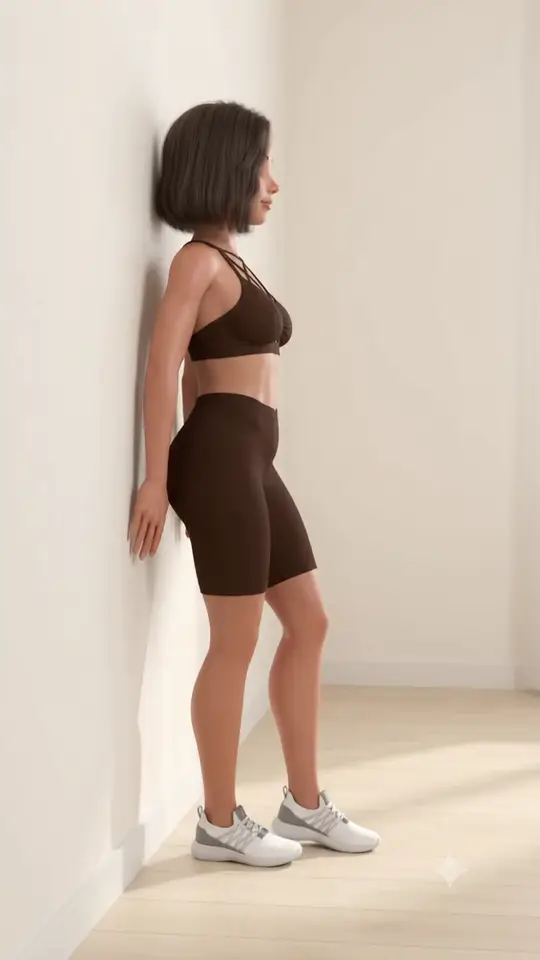
Turn your sound on: a voice coaches every move. Prop your phone where you can see it.
Voice-guided, with an easier and harder version of every move. Nothing to install. 10-minute Wall Pilates for beginners
How often should you do Pilates at home?
Two or three sessions a week is a good start. The CDC advises adults to do muscle-strengthening activity on at least two days a week, alongside 150 minutes of moderate aerobic activity such as brisk walking.
Pilates counts towards the strength part, not the cardio part, which is why the first week above includes walks. For adults 65 and over, the CDC also recommends balance activities; standing moves with a wall or chair for support are a safe way to practise them.
Short and regular beats long and rare. Ten minutes three times a week builds the habit faster than one hour you keep putting off.
How to keep good form without a teacher
Go slower than feels necessary, keep breathing, and use the easier version of a move until you can do it with control. Your body gives you most of the feedback a teacher would.
Slow down
If you could not stop at any moment of a movement, you are going too fast.
Breathe out on the effort
Holding your breath is the most common way an easy move turns into a strain.
Use the wall as a mirror
With your back against it, you can feel straight away when your lower back peels off or your hips shift.
Easier first
Switch to the harder version only when the easier one feels steady for every rep.
Film yourself once
A short clip from the side shows you what a mirror can’t, like a rounded back or knees drifting in.
Know the difference
Muscles working hard is fine. Sharp pain, joint pain or dizziness means stop.
The best free Pilates videos to follow at home
When you want more variety, we have reviewed the most popular free Pilates videos on YouTube and picked the best for each kind of beginner.
- The best free wall Pilates videos on YouTubeSix beginner sessions from 6 to 35 minutes, standing or on the floor.
- Free chair yoga and chair Pilates for seniorsSeven seated sessions from 10 to 31 minutes, from yoga teachers to a hospital and the NHS.
- Free Pilates for women over 50, from physical therapistsFive sessions from three physical therapists and physiotherapists.
- The best free Pilates challenges on YouTubeFour free series from 10 to 28 days, plus our own 28-day plan.
- The best Pilates YouTube channels for beginnersSeven channels, each with the best first video to try.
Is it safe to do Pilates at home?
For most healthy adults, yes: beginner Pilates is slow, low impact and easy to scale. If you are pregnant, injured, recovering from surgery or managing a health condition, check with your doctor before you start.
Clear the space of anything you could trip on or knock, use a chair that cannot roll or slide, and keep water nearby. If you live alone and are unsteady on your feet, choose seated or wall-supported sessions until you know how your body responds.
Read next
Found this useful? Pass it on