Wall Sit
A steady isometric hold that builds leg endurance without a single jump — and teaches you to breathe under effort.
- Level
- Beginner
- Format
- Hold
- Tempo
- Timed hold
- Targets
- Legs
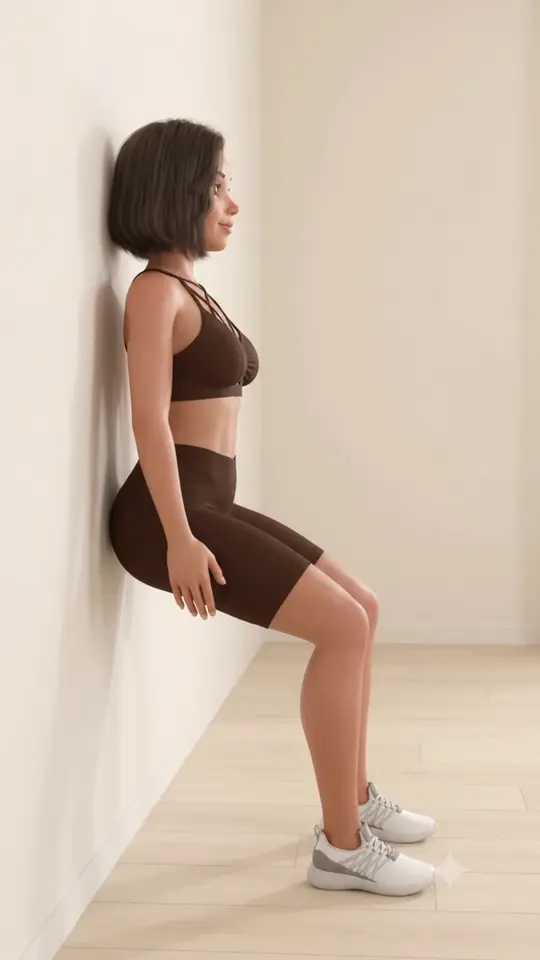
Set up
As the squat, but you stop at a depth you can hold and stay there. Thighs toward parallel.
How to do it well
- 1
Weight in your heels — you should be able to lift your toes.
- 2
Keep breathing. Holding your breath in an isometric drives your blood pressure up.
- 3
Stop the set when your thighs start shaking, not when the timer says so.
The cue you’ll hear most
“Weight in your heels. Lift your toes to check.”
The single most common fault on this move — your voice coach calls it out a quarter of the way into every interval.
Make it easier
Sit higher — a shallow hold you can breathe through beats a deep one you cannot.
Make it harder
Slide toward a right angle at the knee, and hold for the full interval.
Wall Sit: common questions
How long should you hold a wall sit?
Start with a hold you can keep while breathing steadily, often 15 to 30 seconds, and add 5 to 10 seconds at a time as it gets easier. A shallow hold with good form beats a deep one you cannot breathe through.
What muscles does the wall sit work?
Mainly your quads, glutes and core.
How do I make the wall sit easier?
Sit higher — a shallow hold you can breathe through beats a deep one you cannot.
How do I make the wall sit harder?
Slide toward a right angle at the knee, and hold for the full interval.