Wall Pilates for legs and glutes
Twelve minutes for the muscles you use to stand, climb stairs and carry things. You go through wall squats, glute presses, supported reverse lunges and a wall sit twice, with the wall keeping your back and balance in check. Expect your thighs to work hard in the wall sits.
- Length
- 12 minutes
- Level
- Beginner
- Focus
- Legs and glutes
- You need
- A wall
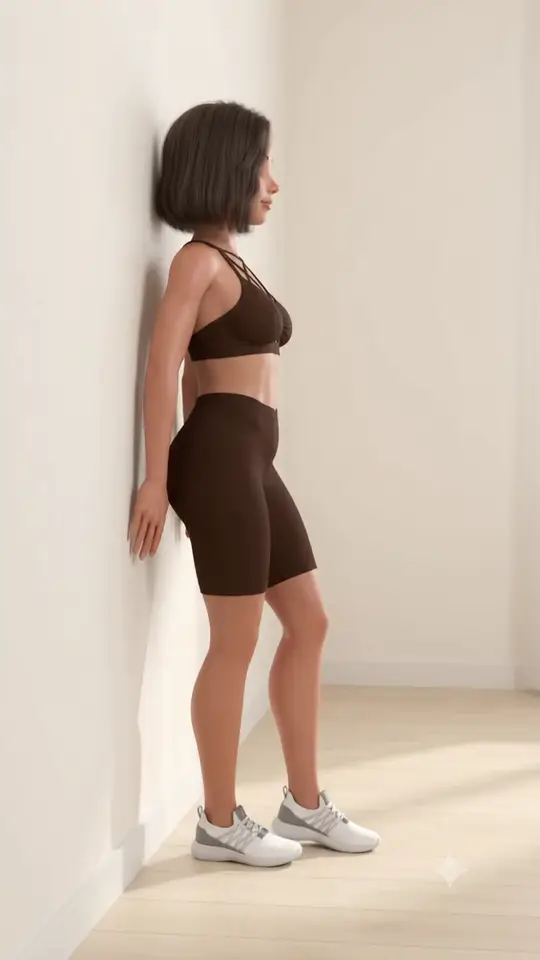
Turn your sound on: a voice coaches every move. Prop your phone where you can see it.
What you’ll do
9 moves, with short rests between them. Tap any move for its full setup, form cues and easier and harder versions.
Warm-up
- Wall MarchingLift the knee without your back leaving the wall.45 s
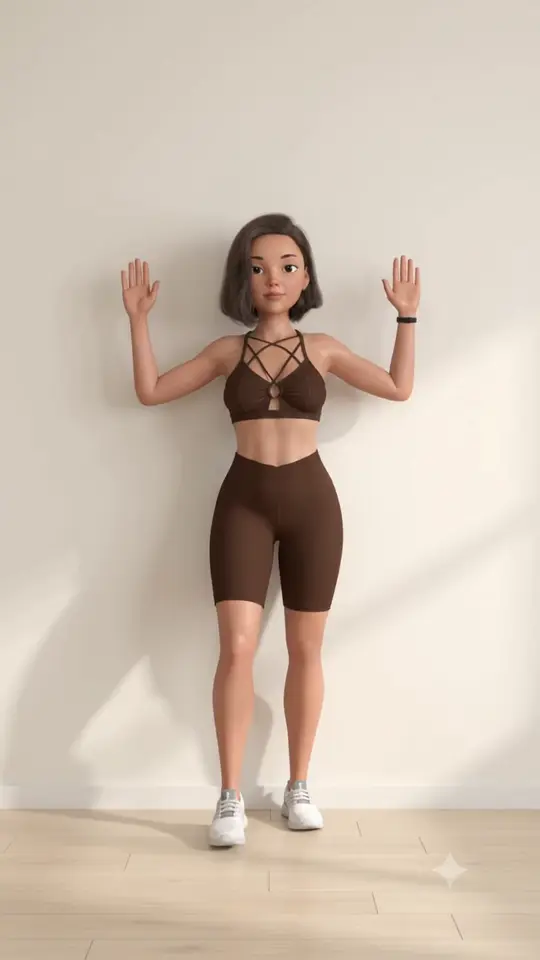
- Wall AngelOnly as far up as your hands stay touching.40 s
Main set
- Wall SquatKnees over your toes — don’t let them fall inward.45 s
- Wall Glute PressPress from the glute. Squeeze at the top.45 s
- Wall-Supported Reverse LungeStep straight back, not out to the side.45 s
- Wall SitWeight in your heels. Lift your toes to check.40 s
- Wall SquatKnees over your toes — don’t let them fall inward.45 s
- Wall Glute PressPress from the glute. Squeeze at the top.45 s
- Wall-Supported Reverse LungeStep straight back, not out to the side.45 s
- Wall SitWeight in your heels. Lift your toes to check.40 s
- Wall Knee DrivesDrive the knee to your chest, then straight back down.40 s
Cool-down
- Wall Roll DownPeel down one bone at a time. Slower.60 s
- Wall Chest OpenerBreathe out into it. Never push into pain.60 s
Questions about this workout
Can Wall Pilates build glutes?
It can strengthen them. Glute presses, squats and lunges load the glutes, and doing them consistently with the harder versions over time is what builds strength. How your shape changes depends on much more than one workout, so we make no promises about that.
My knees hurt in the squats. What should I change?
Use the easier version: slide down only a quarter of the way, keep your knees over your toes, and keep your weight in your heels. If it still hurts, skip the move and check with a doctor or physiotherapist.
Is it safe to do on my own?
For most healthy adults, yes: every move is low impact and the wall gives you support. Move within a range that feels comfortable, stop if anything hurts, and check with your doctor first if you are injured, pregnant, recovering from surgery or managing a health condition.
More free workouts
Put it in a plan
Get a plan built around these moves
Answer a few questions and we’ll set your level, your training days and your focus areas — then guide every session, fifteen minutes at a time.
15-minute sessions · no equipment