Chair Pilates for seniors: 12 gentle moves and a weekly plan
Chair Pilates for seniors uses slow, Pilates-style moves on a sturdy chair to build strength, posture and core control without getting on the floor. Here are 12 gentle moves, a simple weekly plan, and an honest look at what chair exercise can and can't do.
By the TrueMe team · Published · 10 min read · How we write
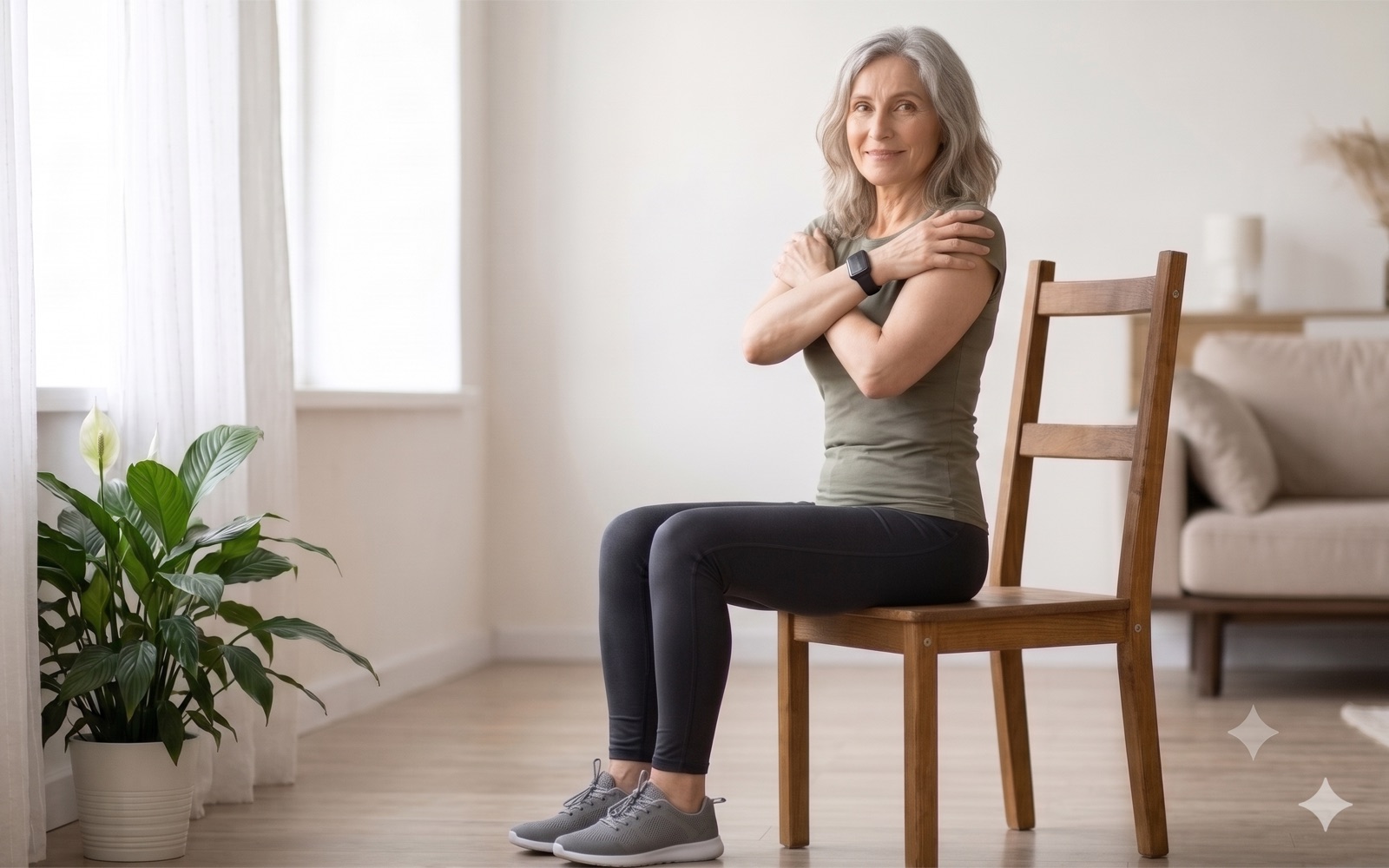
Chair Pilates for seniors is a set of slow, controlled Pilates-style moves done sitting on a sturdy chair, or standing and holding its back. It trains breathing, posture, core control and leg and arm strength without getting down on the floor, which makes it a practical way to start moving more at any age.
It is also honest about its limits. Seated work builds strength, but balance improves most when you practise standing, so the routine below mixes both: mostly seated moves, plus two standing ones that use the chair for support. Every move has an easier and a harder version, and the whole session takes 15 to 20 minutes.
What is chair Pilates for seniors?
Chair Pilates takes the core ideas of Pilates (steady breathing, a long spine, a gently braced middle and slow, precise movement) and applies them to exercises you can do on a chair. Instead of rolling on a mat, you sit tall, move one part of the body at a time and use the chair for stability.
A typical session has four parts:
- Breathing and posture to find a tall, comfortable sitting position.
- Strength moves for the arms, legs and the muscles around your trunk.
- Mobility moves that gently twist, bend and lengthen the spine.
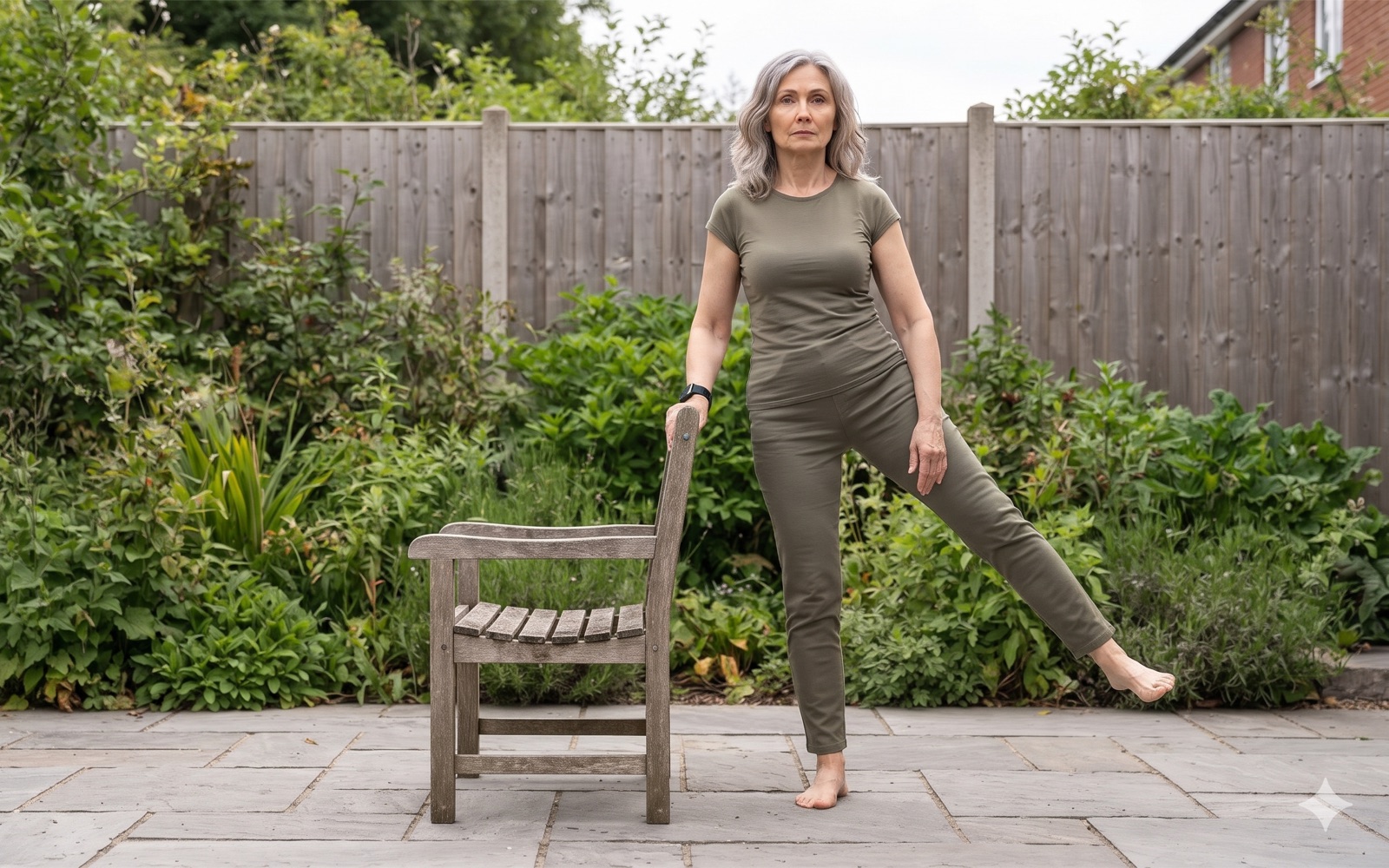
- Supported standing moves for balance, with both hands on the chair back.
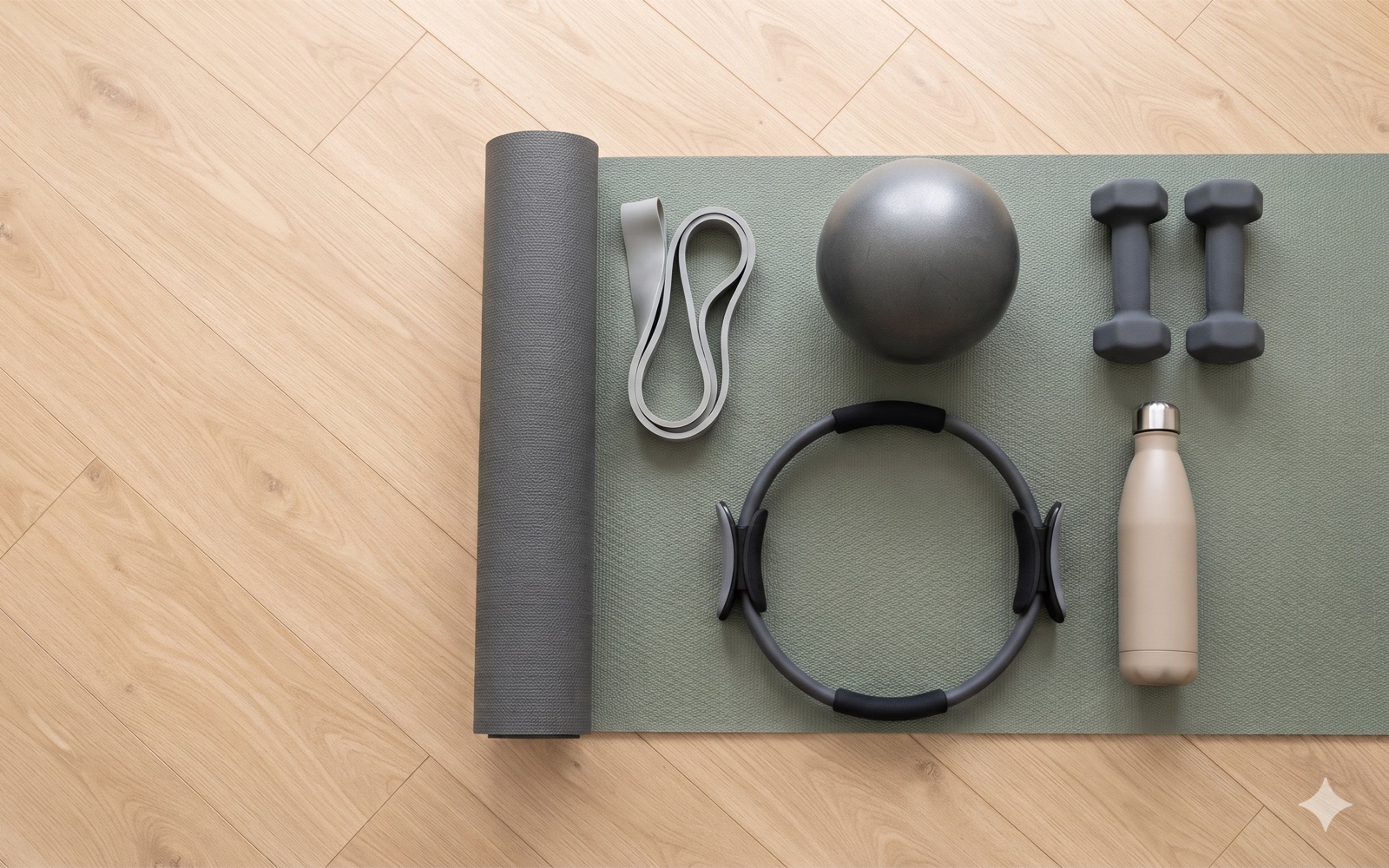
You don’t need any equipment besides the chair. Some people add a light resistance band or small hand weights later, but nothing in this guide needs them.
Is chair Pilates good for seniors?
Yes, as a starting point and as part of a weekly routine. Chair-based exercise has good evidence for building strength in older adults, but sitting-only programmes do little for balance, so it works best combined with some standing practice.
What the research shows:
- Strength. A review of 25 studies in adults over 50 found that chair-based exercise programmes improved grip strength, arm strength and the number of times people could stand up from a chair in 30 seconds [1].
- Balance and walking. A separate review of older adults living with a health condition found seated exercise had smaller benefits for strength and flexibility and no clear effect on balance or mobility. It also did no better than exercise done standing up [2]. That is why this routine includes standing moves at the chair.
- Pilates in later life. In studies of adults aged 60 and over, Pilates programmes improved balance and strength by a moderate amount compared with no exercise, though the certainty of the findings ranges from low to moderate. Those studies tested Pilates in general, not chair Pilates specifically [3].
In plain terms: chair Pilates is a safe, low-barrier way to get stronger and more mobile, and the chair gives you a bridge to standing exercises when you’re ready for them.
How do you set up for chair Pilates safely?
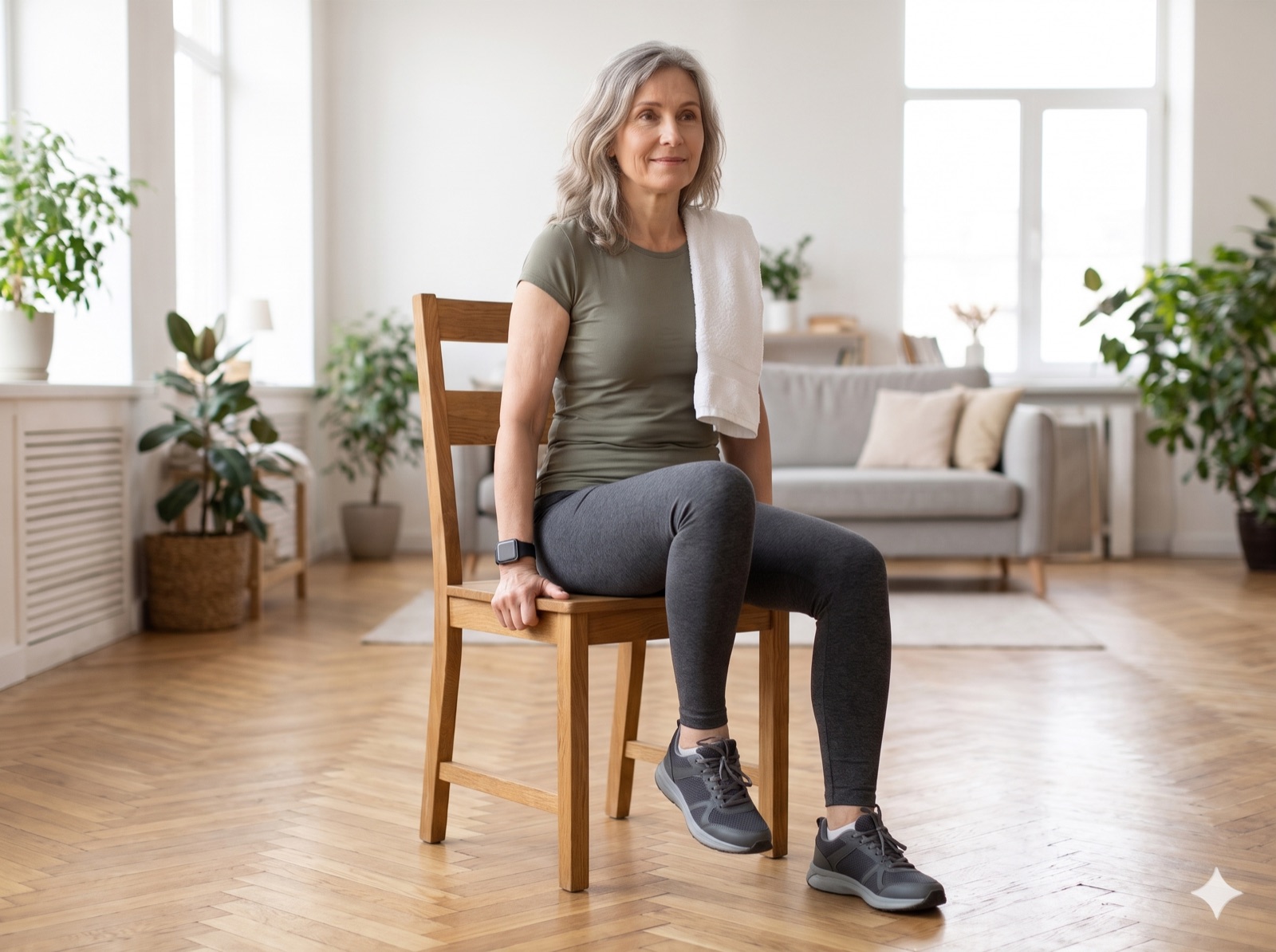
Use a sturdy chair without wheels, placed against a wall so it can’t slide, on a non-slip floor. Sit near the front of the seat with your feet flat and hip-width apart, knees roughly over your ankles.
Before you start:
- Choose the right chair. A solid dining or kitchen chair works best. Avoid soft armchairs, rocking chairs and anything on wheels or castors.
- Clear the space. Move rugs, cables and low tables out of the way, and leave room to stand behind the chair.
- Wear grippy shoes or go barefoot. Socks on a smooth floor can slip. The National Institute on Aging recommends stable footwear or bare feet for grip [4].
- Keep water nearby and wear clothes you can move in.
- Find tall sitting. Sit on your sit bones rather than slouching back, let the crown of your head float up, and relax your shoulders down.
Breathe steadily throughout. Breathe out during the effort and in as you relax, and never hold your breath during strength moves [4].
Which chair Pilates exercises should seniors start with?
Start with breathing and seated marching to warm up, then the moves below in order. Do each one slowly, 8 to 10 times (or for the time given), and stop any move that causes pain.
Warm-up
1. Seated breathing with tall posture
Sit tall with your hands resting on your lower ribs. Breathe in through your nose and feel your ribs widen into your hands; breathe out slowly through your mouth and feel them draw in, as your belly gently tightens. Do 5 slow breaths. This is the breathing pattern you keep for the rest of the session.
2. Seated marching
Holding the sides of the seat, lift one knee a few inches, lower it with control, then lift the other. Keep your back tall and avoid leaning backward. March for 30 to 60 seconds.
Easier: lift only the heel and keep the toes on the floor. Harder: march a little faster and swing your arms.
Upper body and posture
3. Arm pulses with breathing
Sit tall with your arms straight down by your sides, palms facing back, hands a few inches from the chair. Pulse your arms back and forth in small, quick movements while you breathe in for five pulses and out for five. Do this for 30 seconds. It is a seated take on a classic Pilates breathing exercise and works the backs of the arms and shoulders.
Easier: slower pulses, 15 seconds at a time. Harder: raise the arms slightly forward, to hip height, while pulsing.
4. Seated chest opener
Clasp your hands behind your lower back (or hold the back of the seat). Breathe in as you gently draw your shoulder blades together and lift your chest; breathe out and relax. Repeat 8 times. This counters the rounded-shoulder posture that comes from sitting and screens.
Easier: hold each side of the seat instead of clasping your hands. Harder: hold the open position for three breaths.
5. Seated spine twist
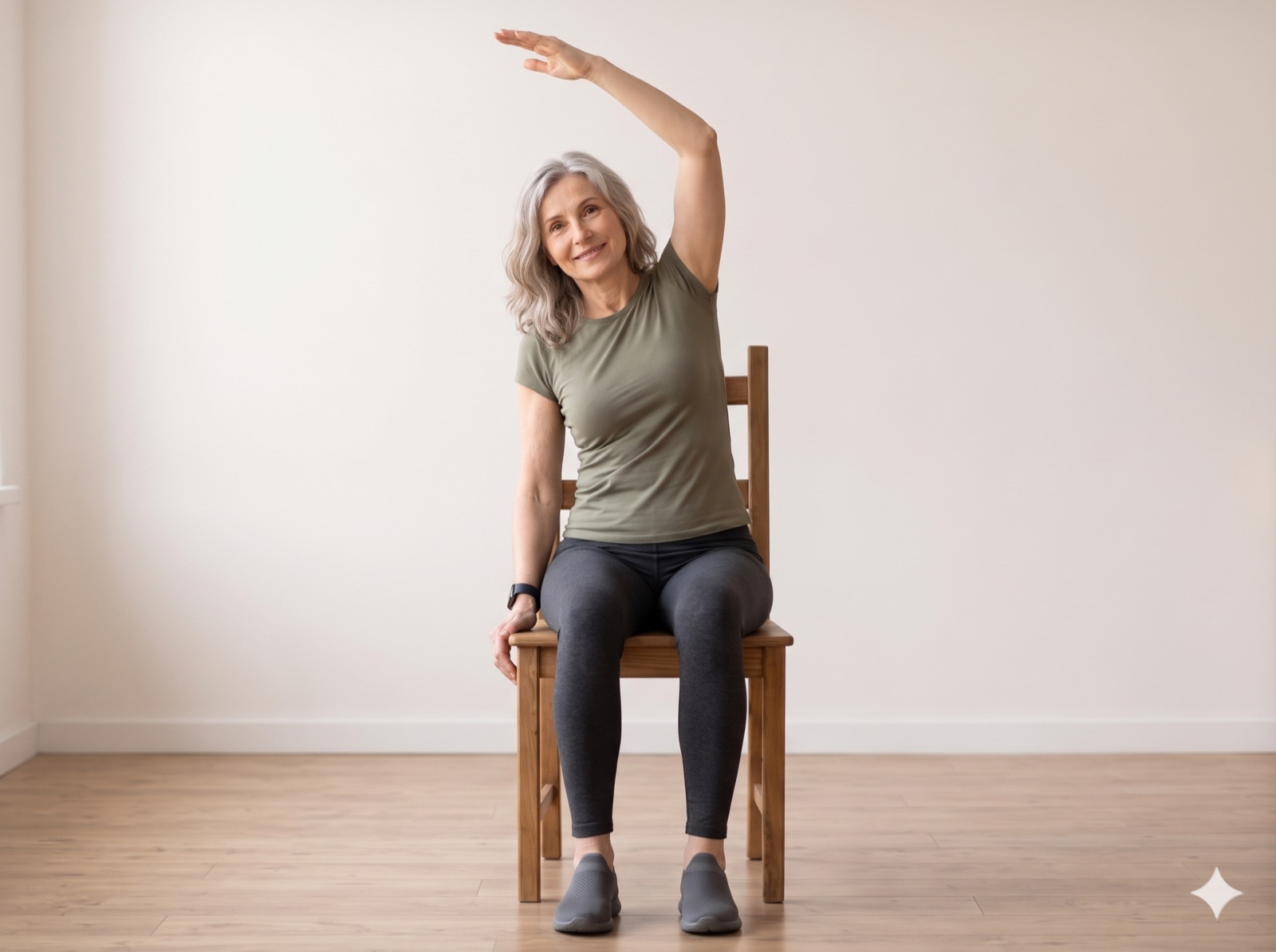
Sit tall with your arms crossed over your chest. Breathe in to grow taller, then breathe out as you turn your upper body to the right, keeping your hips and knees facing forward. Return to the middle and turn to the left. Do 5 each way.
Easier: turn only a little, with one hand on the opposite knee for support. Harder: reach your arms out to the sides as you turn and pause for two breaths.
Core
6. Seated pelvic tilts
Sit near the front of the chair with your hands on your thighs. Breathe out and gently curl your tailbone under so your lower back rounds slightly; breathe in and roll back up to a tall, neutral spine. Do 8 to 10 slow tilts. This teaches the deep abdominal control that every other Pilates move uses.
Easier: make the movement very small. Harder: lean back an inch or two as you curl, then return.
7. Seated knee lift with hold
Sit tall and hold the sides of the seat. Breathe out, gently tighten your middle and lift one knee a few inches. Hold for two breaths without leaning back, then lower slowly. Do 5 on each side.
Easier: lift the heel only. Harder: let go of the seat and rest your hands on your thighs.
Legs
8. Seated leg extension
Sit tall, holding the seat. Slowly straighten one knee until the leg is nearly straight, pull your toes toward you, hold for a breath, then lower. Do 8 to 10 on each leg. It strengthens the front of the thigh, the muscle you rely on to stand up and climb stairs.
Easier: straighten the leg only part of the way. Harder: hold the straight leg for three breaths.
9. Heel and toe raises
With your feet flat, lift both heels as high as you can, lower them, then lift your toes while your heels stay down. Do 10 of each. Strong calves and shins help with walking and steady footing.
Easier: one foot at a time. Harder: press your hands down on your knees to add resistance to the heel raise.
10. Sit to stand
Sit near the front of the chair with your feet slightly behind your knees. Lean forward from the hips, press through your feet and stand up, then sit back down slowly and with control. Do 5 to 10.
Easier: push up with your hands on your thighs or the seat. Harder: cross your arms over your chest and take three seconds to sit down. This is the movement the 30-second chair stand test measures, and the one chair-based programmes improve most clearly [1].
Balance, standing at the chair
11. Supported heel raises
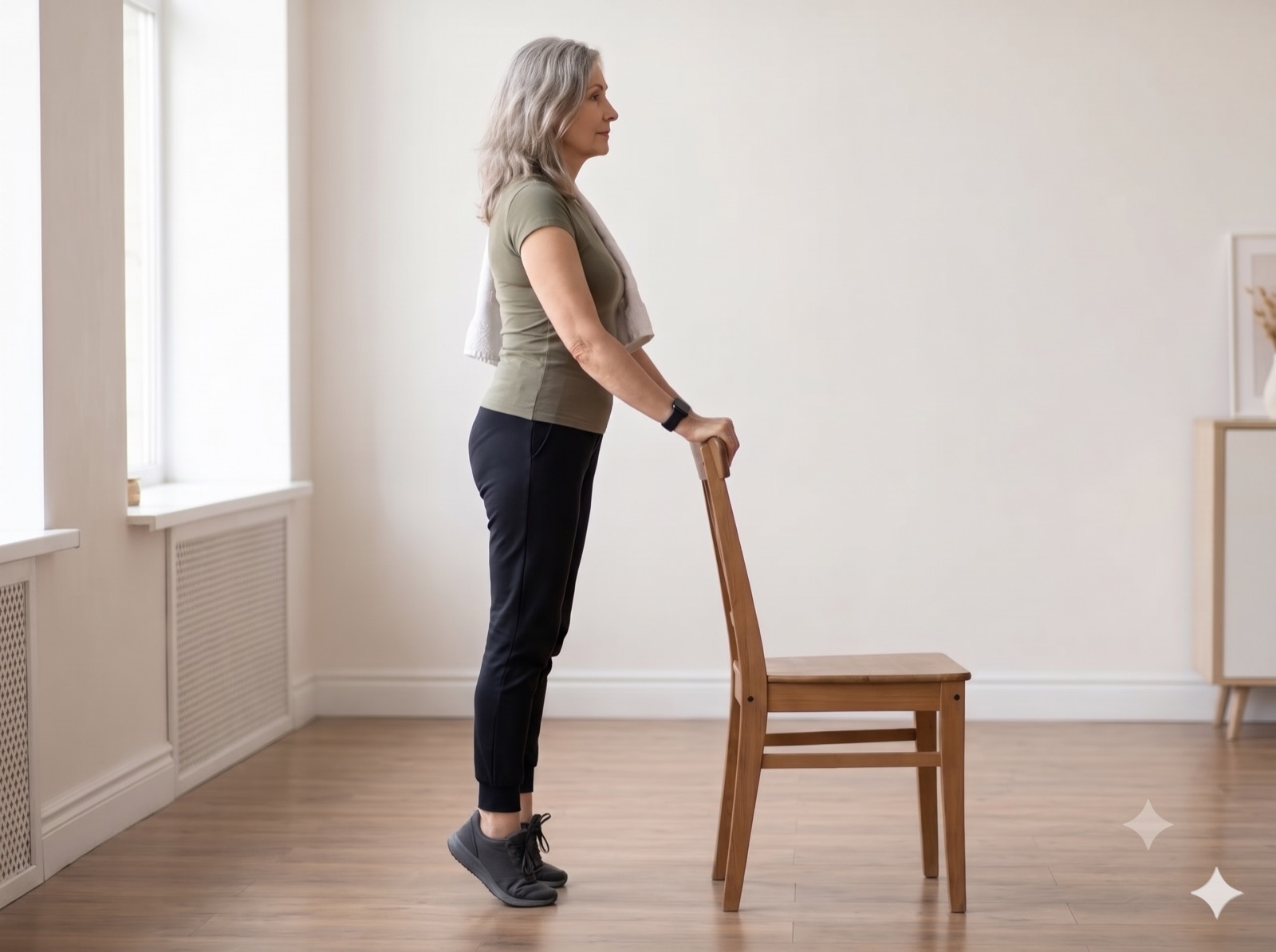
Stand behind the chair with both hands resting lightly on its back. Rise slowly onto the balls of your feet, pause, and lower with control. Do 10.
Easier: rise only a little and keep both hands firmly on the chair. Harder: rest just your fingertips on the chair.
12. Supported side leg lift
Stand behind the chair holding its back. Shift your weight onto your left leg and slowly lift your right leg out to the side a few inches, keeping your toes pointing forward and your upper body still. Lower slowly. Do 8 on each side.
Easier: a smaller lift. Harder: hold the lifted leg for two seconds.
How many reps should you do, and how often?
Aim for chair Pilates on two or three non-consecutive days a week, doing 8 to 12 slow repetitions of each strength move. Work until the last few repetitions feel challenging but your form stays clean.
That matches public health guidance. The CDC recommends that adults 65 and older do muscle-strengthening activities at least 2 days a week, plus balance activities and at least 150 minutes of moderate aerobic activity, such as brisk walking, every week [5]. For strength moves, it suggests sets of 8 to 12 repetitions, done until another repetition would be hard without help [6].
If that sounds like a lot, start smaller. The CDC also advises being as physically active as your abilities and conditions allow when you can’t meet the full recommendations [5]. Our weekly exercise minutes calculator shows how your week adds up.
What does a simple weekly chair Pilates plan look like?
A simple plan pairs three short chair Pilates sessions with walking and a few minutes of balance practice. Adjust the days to fit your week, keeping a rest or light day between the strength sessions.
| Day | Session | Time |
|---|---|---|
| Monday | Chair Pilates: moves 1–12 | 15–20 min |
| Tuesday | Walk at a comfortable, brisk pace | 15–30 min |
| Wednesday | Chair Pilates: moves 1–12 | 15–20 min |
| Thursday | Walk, plus supported heel raises and side leg lifts | 20–30 min |
| Friday | Chair Pilates: moves 1–12 | 15–20 min |
| Saturday | Walk or another activity you enjoy | 20–30 min |
| Sunday | Rest, or gentle seated breathing and twists | 5–10 min |
Keep a short note of how many sit-to-stands you can do. Seeing that number creep up over a few weeks is one of the clearest signs you’re getting stronger.
How do you progress beyond the chair?
Once the seated moves feel easy, add more standing work. Keep the chair close for support, and move to exercises that use a wall instead.
- Stand for longer. Do the sit-to-stand with arms crossed, then add a two-second pause just above the seat.
- Reduce your support. In the balance moves, go from two hands to fingertips, then hover your hands just above the chair back.
- Try wall moves. A wall gives support while you stand. Wall marching is the standing version of the seated march, and the wall squat builds on the sit to stand.
- Follow a guided session. Our gentle Wall Pilates workout for seniors plays every move with voice cues and an easier version throughout.
Change one thing at a time, and keep the chair nearby while you build confidence.
Who should check with a doctor before starting?
Most older adults can start gentle chair exercise safely, but check with your doctor or a physical therapist first if you have a heart or lung condition, have had recent surgery or a joint replacement, have fallen in the last year, get dizzy when you stand, or are unsure whether a movement suits you [4].
During any session, stop if a move causes pain. Stop and get help if you feel dizzy or sick, or have chest pain or pressure [4]. Stand up slowly after seated work, and keep a hand on the chair until you feel steady.
The bottom line
Chair Pilates gives seniors a safe, simple way to build strength, posture and core control without getting on the floor. Chair-based exercise has solid evidence for improving strength in older adults, while balance improves most with standing practice, so this routine includes both.
Start with two or three 15-minute sessions a week, move slowly and breathe steadily, and add standing work as you get stronger. Pair it with regular walking and you’re covering the basics that public health guidance recommends for older adults [5].
Sources
Every source was read before it was cited. Numbers in the text, like [1], point here.
- [1]The effect of chair-based exercise on physical function in older adults: a systematic review and meta-analysisKlempel and colleagues, International Journal of Environmental Research and Public Health, 2021
- [2]To sit or not to sit? A systematic review and meta-analysis of seated exercise for older adultsSexton and Taylor, Australasian Journal on Ageing, 2019
- [3]Pilates improves physical performance and decreases risk of falls in older adults: a systematic review and meta-analysisFernández-Rodríguez and colleagues, Physiotherapy, 2021
- [4]Three types of exercise can improve your health and physical abilityUS National Institute on Aging, n.d.
- [5]Older adult activity: an overviewUS Centers for Disease Control and Prevention, 2025
- [6]What counts as physical activity for adultsUS Centers for Disease Control and Prevention, 2023
Found this useful? Pass it on