Pilates equipment for home: what you need and what to skip
Most beginners need only a good mat and a bare wall for Pilates at home. Trials show mat Pilates builds core endurance and flexibility without machines; a small ball or resistance band adds variety later, and household items stand in for the rest.
By the TrueMe team · Published · 7 min read · How we write
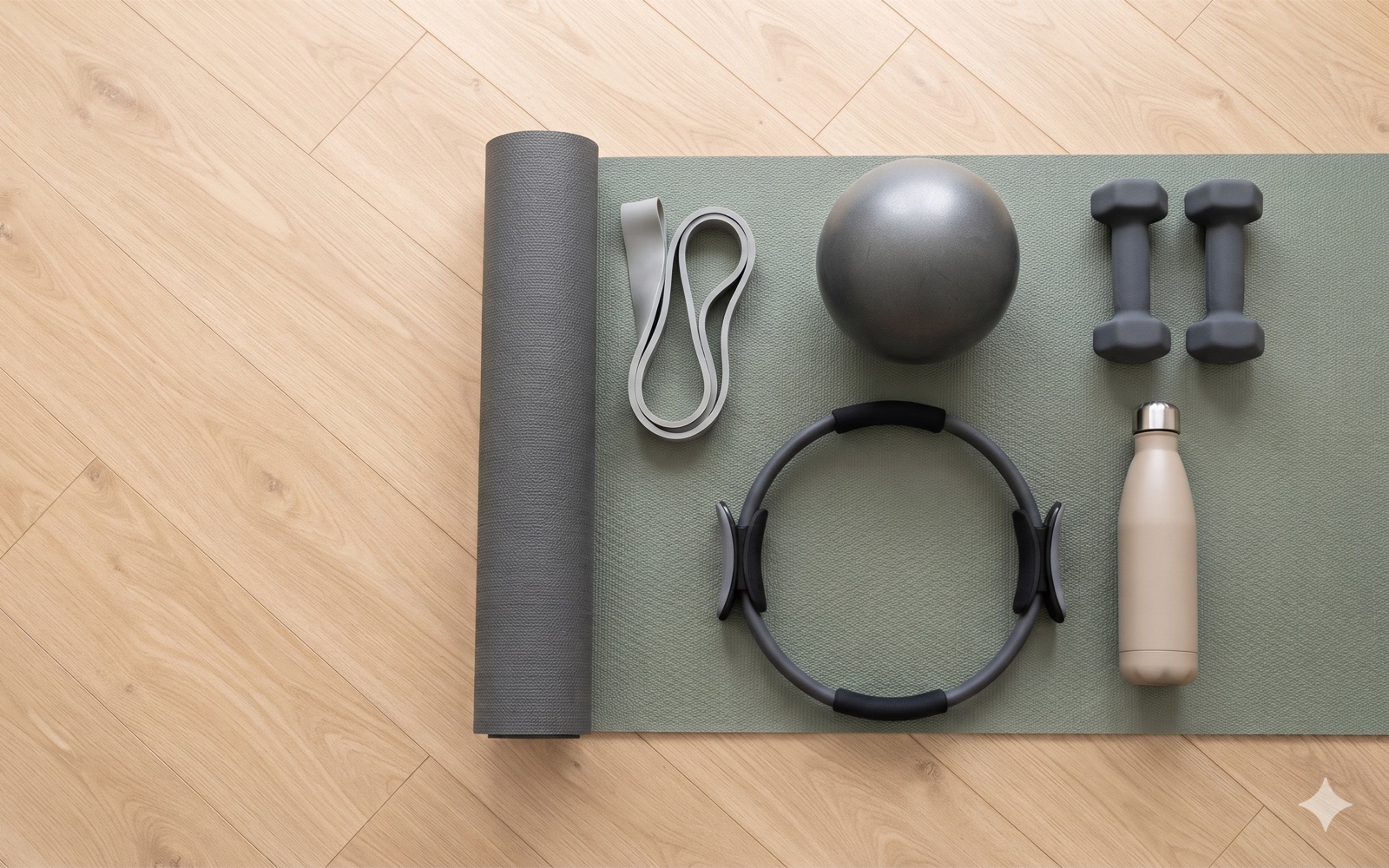
The only Pilates equipment for home that most beginners need is a good mat. A wall, a sturdy chair and a few household items cover almost everything else, and small props such as a soft ball or resistance band are cheap extras you can add later if you want more variety.
This guide explains whether Pilates at home works, what to buy first and what to skip, how to choose a mat, which small props are worth it, whether you need a reformer, and what to use instead of equipment you don’t have.
Do you need equipment for Pilates at home?
No. Classic mat Pilates was built around your own body weight, and you can do a full session with nothing but a mat. Equipment adds variety and resistance, but it isn’t what makes Pilates work.
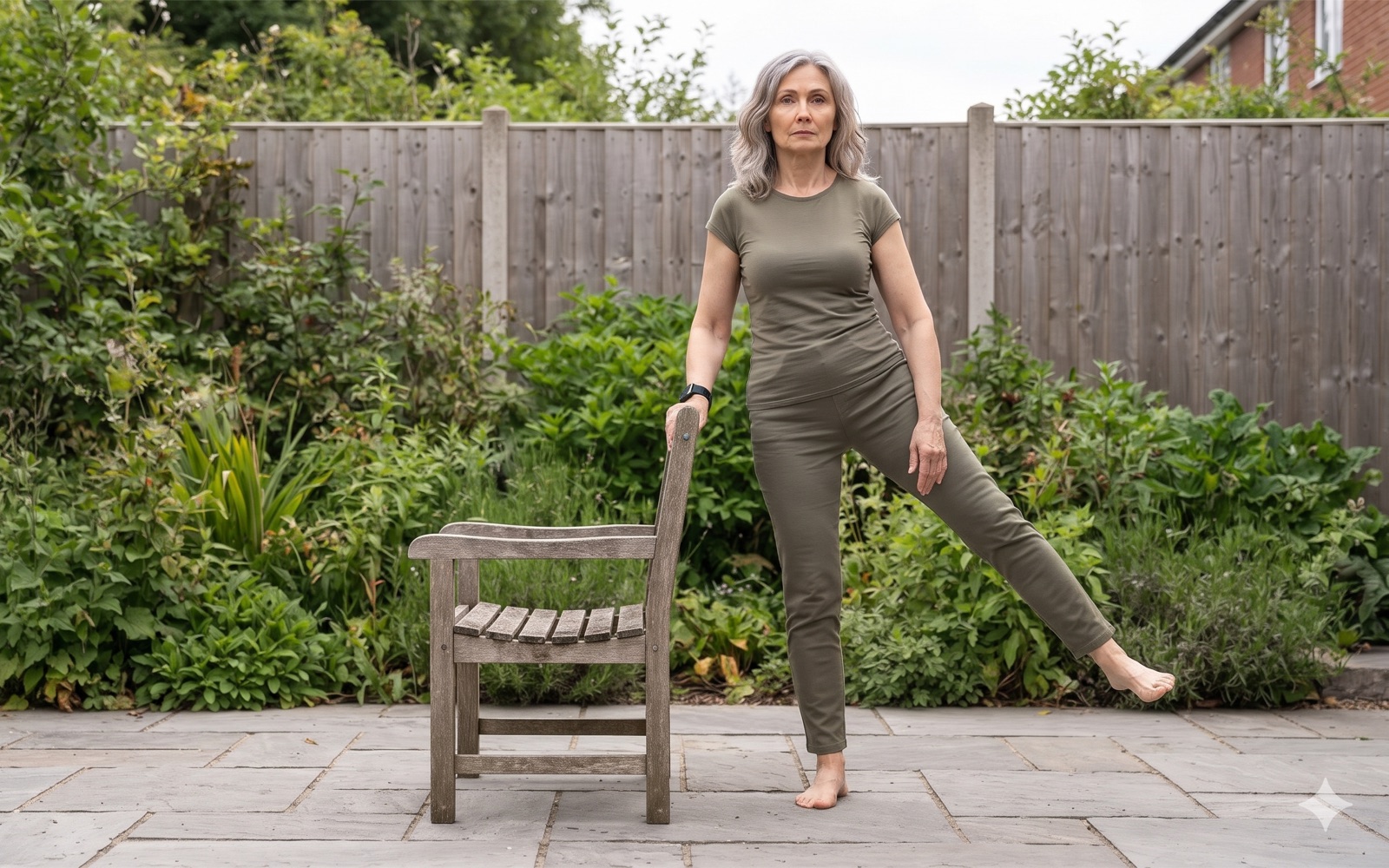
Research describes Pilates as exercise that can be done on a mat or with specialized equipment [1], and much of the evidence comes from mat programs. A review of Pilates in older adults concluded that it is affordable and safe for most people using just a mat on the floor [2]. A wall then gives you support and something to push against, which is the whole idea behind Wall Pilates. Our Wall Pilates guide explains how that works.
| Level | What you need | What it adds |
|---|---|---|
| Start | A mat, a wall, a sturdy chair | Everything for a full beginner routine |
| Optional | Small soft ball, resistance band | Variety, a squeeze target, light resistance |
| Nice to have | Pilates ring, light hand weights, foam roller | More resistance and recovery options |
| Rarely needed at home | Reformer or other large machines | Spring resistance, best learned with a teacher |
Is Pilates at home effective?
Yes. Mat Pilates without machines has improved strength and flexibility in controlled trials, so home practice can work as well as a class if you do it regularly.
In one trial, middle-aged adults who did a basic mat routine twice a week for 12 weeks improved abdominal endurance, hamstring flexibility and upper-body endurance [3]. A meta-analysis of randomized trials found that Pilates on a mat or apparatus two to three times a week for 5 to 12 weeks improved abdominal endurance compared with no exercise [4].
What you can lose at home is structure and feedback. In a study of previously inactive women aged 40 to 65, those who started with six months of supervised sessions stuck with exercise better than those who exercised at home from the start [7]. You can make up for it with a fixed schedule, a written plan or a guided program, and an occasional class to check your form.
What Pilates equipment for home should you buy first?
Buy a mat first, and wait a few weeks before buying anything else. Once you know which moves you enjoy, you’ll know which props would actually get used.
- A Pilates or exercise mat: the one item worth spending a little more on, because you’ll use it every session.
- A small soft ball: inexpensive, and it adds squeezes and back support to mat moves.
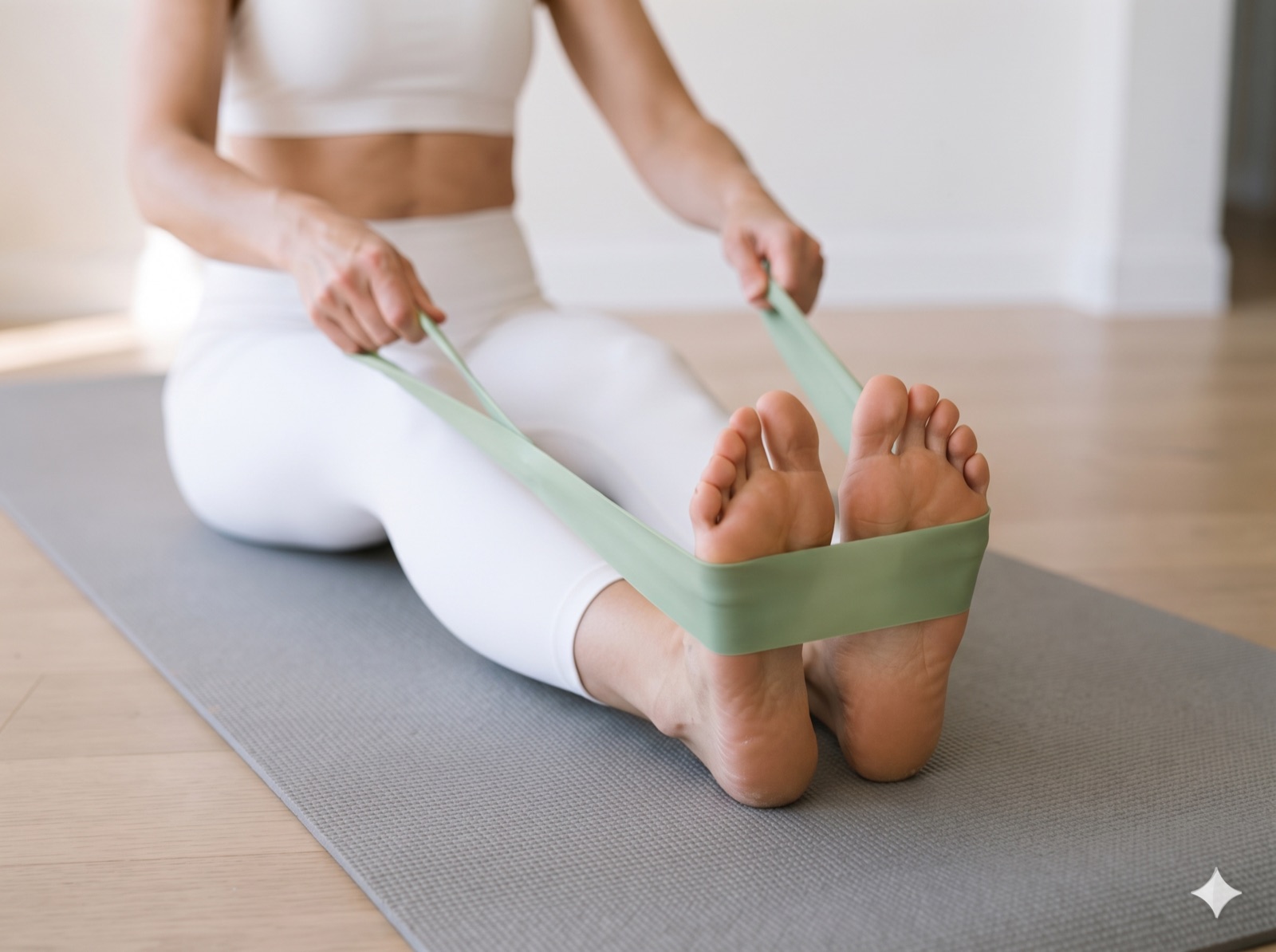
- A resistance band: light, packable and useful for arms, legs and stretches.
- Light hand weights: helpful later for arm work and standing moves.
Bands are a good example of how far simple kit goes. A 2025 meta-analysis found that elastic band training improved leg strength and balance in older adults [5], and a network meta-analysis of 102 trials found that bodyweight, band, free-weight and machine training all improved strength in older adults, so the best choice depends on what you enjoy and will keep doing [6].
What type of mat do you need for Pilates?
Choose a mat that is thicker and softer than a typical yoga mat, about 10 to 15 mm (around half an inch), with a non-slip surface. Pilates involves lots of rolling and lying on your back, so cushioning for your spine matters more than a thin, grippy feel.
| Feature | What to look for |
|---|---|
| Thickness | 10–15 mm for comfort on hard floors; thinner if you also do standing balance work on it |
| Firmness | Soft enough to cushion your spine, firm enough that your hands don’t sink |
| Surface | Non-slip on both sides, easy to wipe clean |
| Size | At least as long as you are tall, so your head and hips are both on it |
| Storage | Rolls or folds to fit where you’ll keep it |
If you only have a thin yoga mat, fold a towel under your back for rolling moves, or lay two mats on top of each other.
Which small Pilates props are worth adding?
Small props are worth it if they make you want to practise. Each one changes how familiar moves feel, but none is essential.
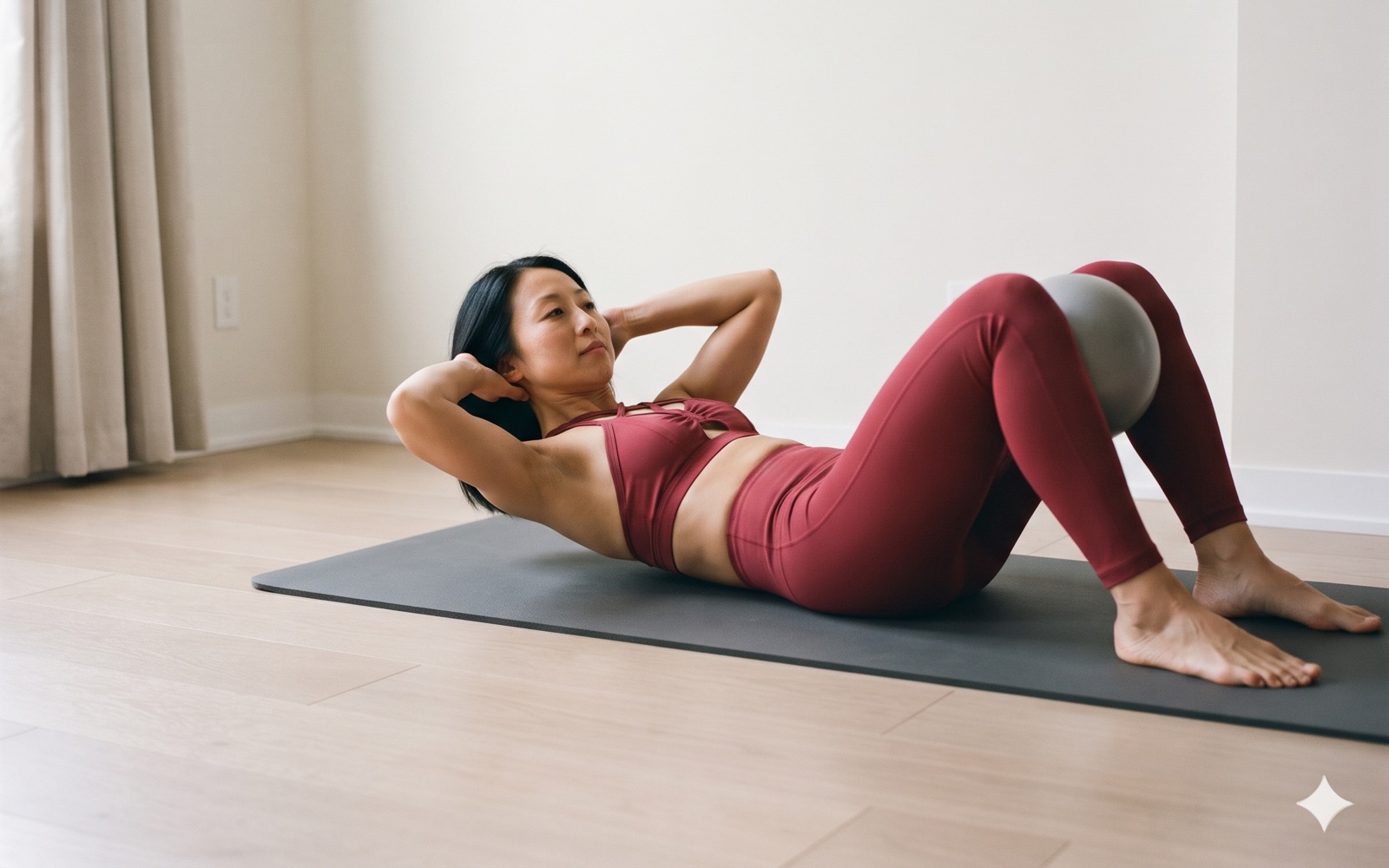
- Small soft ball: squeezed between your knees, it adds inner-thigh and core work; tucked behind your back, it supports curls and roll-backs. See our Pilates ball exercises.
- Resistance band: adds light resistance to arm presses, leg presses and seated rows, and helps you reach your feet in stretches.
- Pilates ring: a flexible ring with pads that you squeeze between your hands or legs; similar to the ball, with a firmer feel.
- Light hand weights: about 1 to 3 pounds is plenty for Pilates arm work.
- Foam roller: used for some balance and mobility exercises and for self-massage after a session.
Do you need a reformer at home?
No. A reformer is a large spring-loaded machine that adds adjustable resistance and support, but it takes up space, costs a lot, and is best learned with a qualified teacher. Mat Pilates gives you the core of the method without it.
If you’re curious about the reformer, try a few studio classes before you consider buying one. Our mat vs reformer Pilates guide compares the two in detail, including what the research says about each.
What can you use instead of Pilates equipment?
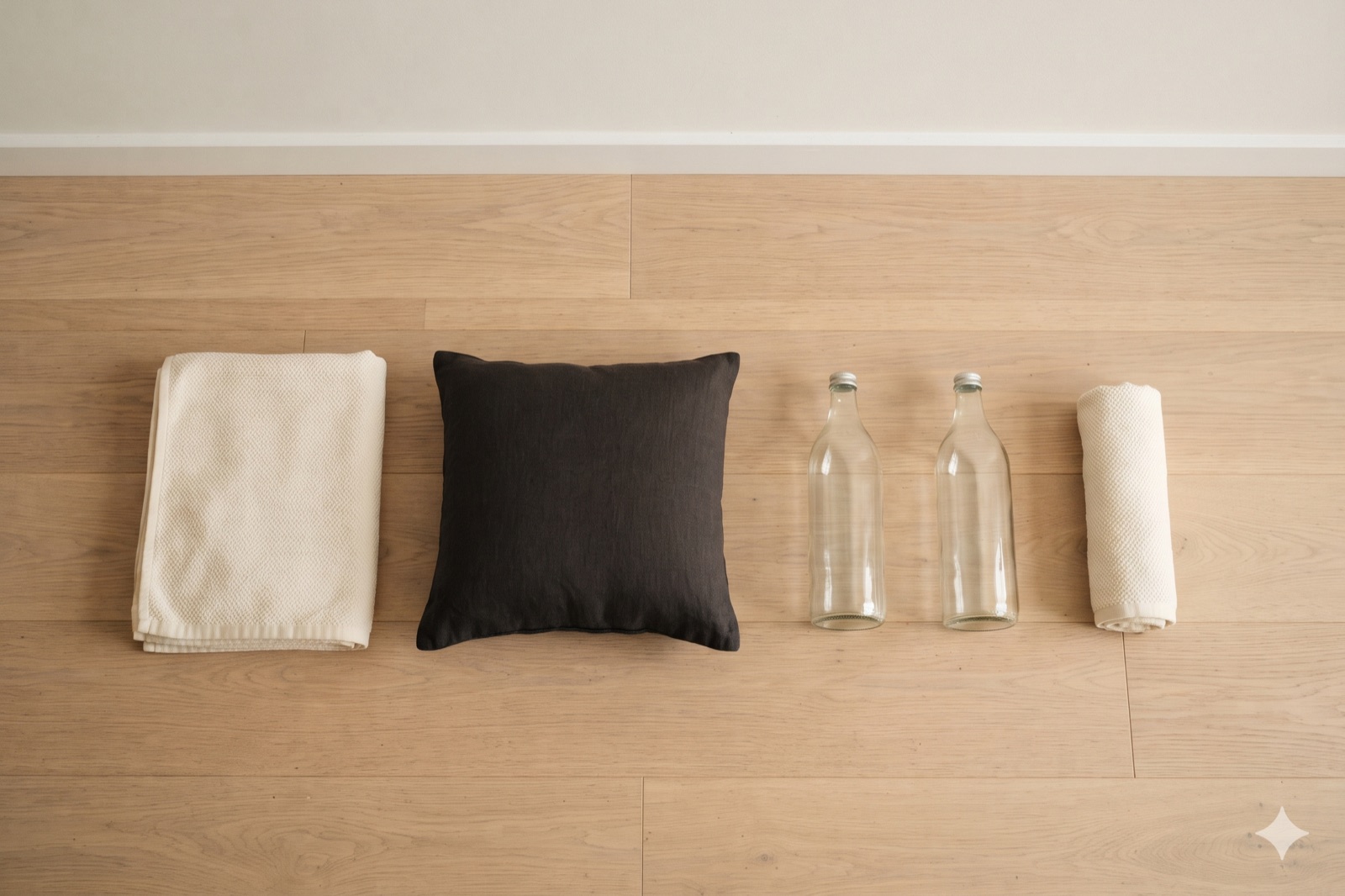
Household items cover most props. A towel, a cushion and two water bottles can stand in for a mat, a ball and light weights while you decide whether to buy anything.
| Instead of | Try |
|---|---|
| A thick mat | A folded blanket or two towels on a rug |
| A small soft ball | A firm cushion or a rolled bath towel |
| A resistance band | A long towel or scarf for stretches (no resistance) |
| Light hand weights | Two full water bottles or cans |
| A Pilates ring | A firm cushion squeezed between your knees |
| A barre or support | A kitchen counter, sturdy chair back or wall |
What Pilates equipment can you skip?
You can skip anything that promises results on its own, anything large you haven’t tried, and anything you’re buying mainly because it looks the part. None of it makes Pilates work better than a mat and regular practice.
- Large machines such as reformers, chairs and towers: expensive and bulky, and best learned in a studio first.
- Gadgets that promise toning or spot reduction: your body doesn’t lose fat from the area you exercise, whatever the device claims.
- Big starter bundles: a kit with ten props often means several you never use. Add one prop at a time instead.
- Special clothing and grip socks: comfortable clothes you can move in are enough, and bare feet work well on a mat. Grip socks help only on slippery studio floors.
- Heavy weights: Pilates arm work uses light loads and many controlled reps, so 1 to 3 pounds goes a long way.
A simple test before buying anything: name three exercises you would use it for this week. If you can’t, wait.
How do you set up a Pilates space at home?
You need a clear patch of floor about the size of your mat with a little room to reach your arms out, plus a stretch of bare wall. Most people can make that space in a living room or bedroom in a minute or two.
- Pick a bare wall with nothing hanging nearby, and clear about an arm’s length around your mat.
- Check the floor: a mat on carpet can slide, so put it on a rug or hard floor if you can.
- Keep your kit together in a basket by the wall, so setting up takes seconds.
- Plan your sessions at set times; two or three a week fits US guidelines for muscle-strengthening activity on at least two days [8].
If you have a health condition, an injury, osteoporosis or a pregnancy, check with your doctor or physical therapist before starting a new routine. To begin with no equipment at all, try the 10-minute Wall Pilates for beginners session.
The bottom line
Pilates equipment for home can be as simple as a good mat and a bare wall. Trials of mat programs show you can build core endurance and flexibility without machines, and simple props like bands also build strength.
Buy a thick, non-slip mat first, use household swaps for everything else, and add a small ball or band once you know they’ll get used. Skip the reformer unless you’ve tried it in a studio and love it, and set regular times so home practice becomes a habit.
Sources
Every source was read before it was cited. Numbers in the text, like [1], point here.
- [1]Defining Pilates exercise: a systematic reviewWells and colleagues, Complementary Therapies in Medicine, 2012
- [2]Benefits of Pilates in the elderly population: a systematic review and meta-analysisPereira and colleagues, European Journal of Investigation in Health, Psychology and Education, 2022
- [3]Pilates for improvement of muscle endurance, flexibility, balance, and postureKloubec, Journal of Strength and Conditioning Research, 2010
- [4]Effect of the Pilates method on physical conditioning of healthy subjects: a systematic review and meta-analysisCampos and colleagues, Journal of Sports Medicine and Physical Fitness, 2016
- [5]Effects of elastic band resistance training on lower limb strength and balance function in older adults: a systematic review and meta-analysisMeng and colleagues, Frontiers in Sports and Active Living, 2025
- [6]The effects of different resistance training modalities on muscle strength in community-dwelling older adults: a network meta-analysisWiedenmann and colleagues, Gerontology, 2025
- [7]Controlled comparison of retention and adherence in home- vs center-initiated exercise interventions in women ages 40-65 years: the S.W.E.A.T. StudyCox and colleagues, Preventive Medicine, 2003
- [8]Top 10 Things to Know About the Second Edition of the Physical Activity Guidelines for AmericansOffice of Disease Prevention and Health Promotion (ODPHP), U.S. Department of Health and Human Services, 2025
Found this useful? Pass it on