Mat Pilates exercises: 12 classic moves explained
Mat Pilates exercises are slow, controlled floor moves that train your core, back, hips and flexibility. The classic sequence has 34 of them; these 12 foundational moves, each with a beginner version, are plenty to build a strong home practice.
By the TrueMe team · Published · 9 min read · How we write
Mat Pilates exercises are the floor-based moves of the Pilates method, done on a mat with your own body weight to build core strength, flexibility and control. Most of them trace back to the original sequence Joseph Pilates published in 1945, which listed 34 mat exercises in a set order, from the hundred to the push-up.
You don’t need all 34 to benefit. This guide explains how the classic list is organised, then walks through 12 foundational mat Pilates exercises with a beginner version of each. It also covers what the research says about mat Pilates, whether it counts as strength or cardio, and which moves to modify or leave for later.
What are mat Pilates exercises?
They are controlled, breath-led movements done lying, sitting, kneeling or side-lying on a mat, designed to train your deep abdominal muscles, back, hips and shoulders together. The aim is quality of movement, not speed or repetitions.
A systematic review of how researchers define Pilates found broad agreement: it is a mind-body exercise focused on strength, core stability, flexibility, muscle control, posture and breathing, done either on a mat or with specialised equipment [1]. Mat work is the version you can do anywhere, which is why it is usually the first step for beginners and the backbone of most home practice.
Six classic principles are often taught alongside the moves: centering, concentration, control, precision, flow and breathing [1]. In practice, that means moving slowly enough to feel which muscles are working and keeping your breath steady throughout.
How many mat Pilates exercises are there?
The classical mat sequence has 34 exercises, but modern teachers use hundreds of variations, from gentle beginner versions to advanced flows. A typical beginner class uses 10 to 15 of them.
The original 34 run from foundational moves such as the hundred, the roll-up and single-leg circles to advanced ones such as the teaser, the jackknife, the corkscrew and the boomerang. Those advanced moves ask for a lot of abdominal strength and spinal control, and several roll your weight onto your upper back and neck, so most people build up to them over months or skip them altogether.
| Level | Examples from the classic sequence |
|---|---|
| Foundational | Hundred, roll-up, single-leg circles, single-leg stretch, spine stretch forward, swimming |
| Intermediate | Double-leg stretch, saw, swan, single-leg kick, side kick series, shoulder bridge |
| Advanced | Teaser, roll-over, jackknife, corkscrew, boomerang, control balance |
The 12 exercises below come mostly from the first two rows, each with a beginner version.
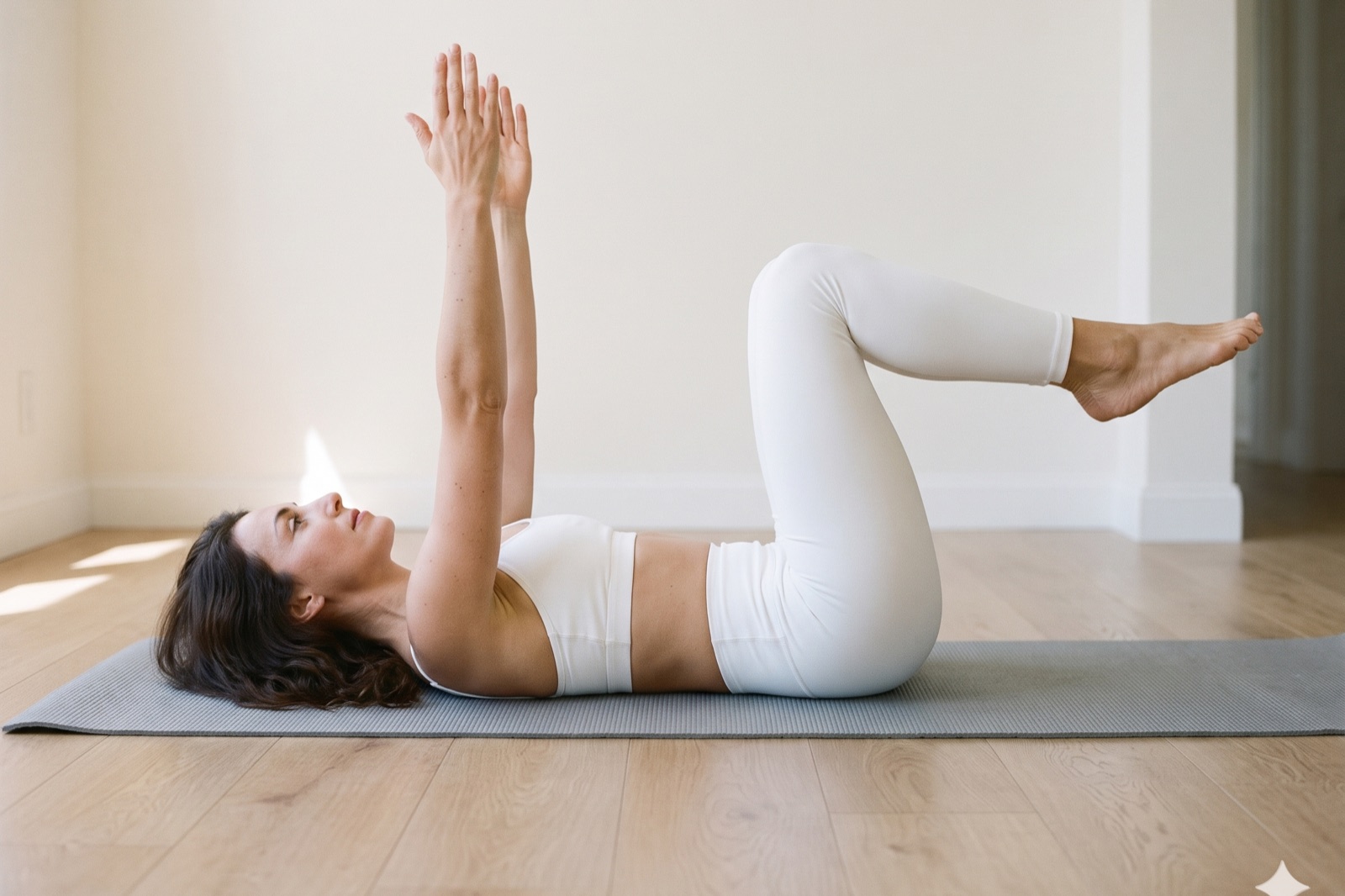
12 classic mat Pilates exercises for beginners
Do 5 to 10 controlled repetitions of each, breathing out on the effort. Keep your neck relaxed, and lower your head to the mat any time it feels strained.
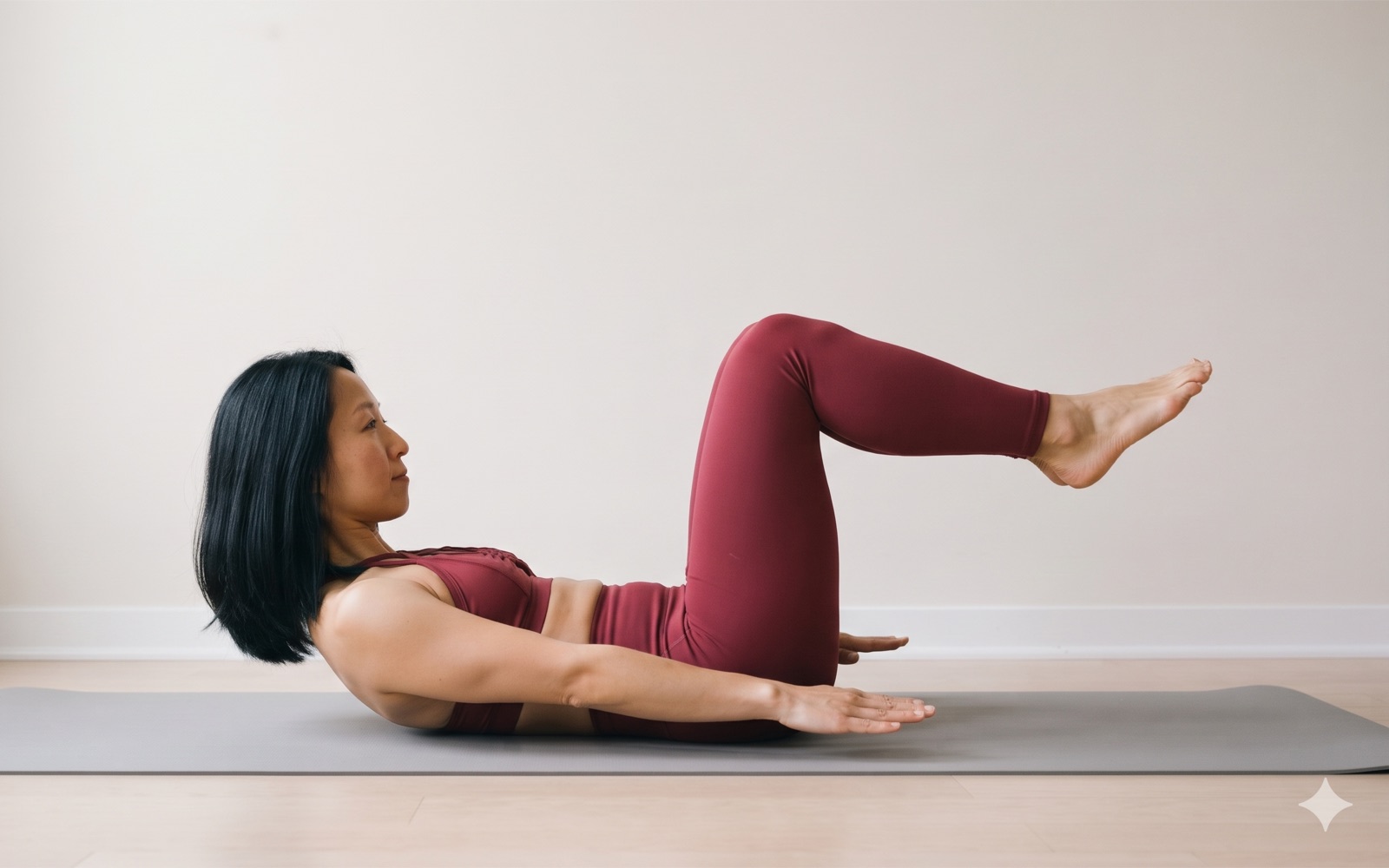
1. The hundred
Lie face up with your legs in tabletop, knees over hips. Curl your head and shoulders up, reach your arms long beside your hips and pump them in small beats: breathe in for five beats, out for five. Ten breaths make a hundred. Beginner: keep your head down and feet on the mat, and start with five breaths.
2. Half roll-back (roll-up prep)
Sit with your knees bent, feet flat and arms reaching forward. Breathe out, tuck your pelvis and roll back halfway, curving your spine, then breathe in and return to sitting tall. Beginner: hold the backs of your thighs for support. The full roll-up, from lying to sitting, comes later.
3. Single-leg circles
Lie face up with one leg reaching toward the ceiling and the other knee bent, foot on the mat. Draw small circles with the raised leg, five each way, keeping your pelvis completely still. Beginner: bend the raised knee a little and keep the circles the size of a dinner plate.
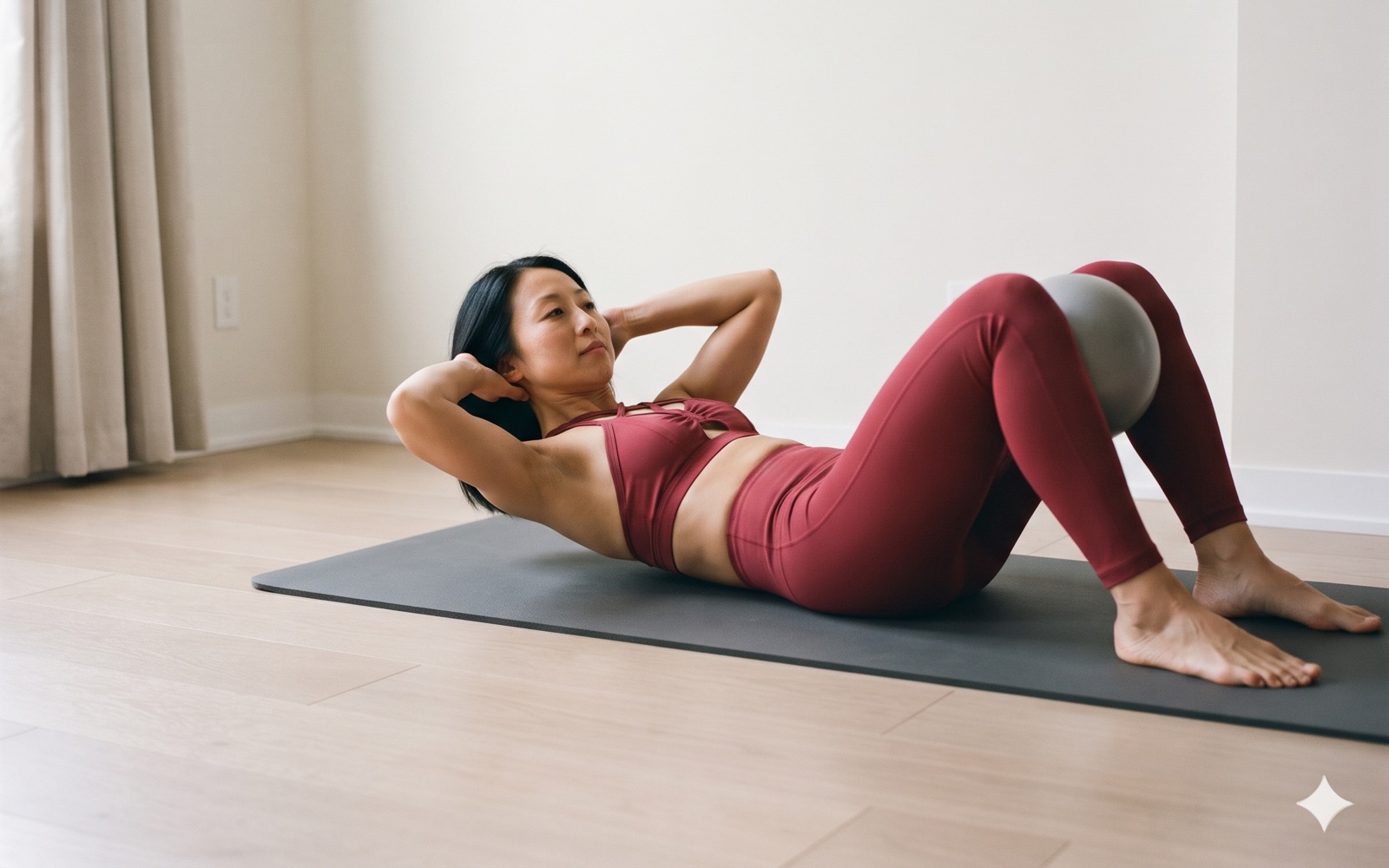
4. Single-leg stretch
Curl your head and shoulders up, draw one knee toward your chest and reach the other leg out on a diagonal. Switch legs in a steady rhythm, breathing out as each leg extends. Beginner: keep your head down and point the extended leg higher toward the ceiling.
5. Double-leg stretch
From the same curled position, hug both knees in. Breathe in as you reach your arms back past your ears and your legs out on a diagonal, then breathe out as you circle your arms round and hug your knees again. Beginner: reach your arms forward only and keep your legs high.
6. Spine stretch forward
Sit tall with your legs a little wider than your hips and your feet flexed. Breathe out and roll forward one vertebra at a time, reaching your arms past your feet, then roll back up to sitting. Beginner: sit on a folded towel and bend your knees slightly.
7. Saw
Sit tall with your legs wide and arms out to the sides. Turn your upper body to one side, then reach your opposite hand toward the outside of that foot as you breathe out. Return to centre and repeat on the other side. Beginner: turn and reach only as far as your hamstrings allow.
8. Swan prep
Lie face down with your hands beside your shoulders and your elbows close in. Press gently through your hands to lift your head and chest a few inches, keeping your eyes down and your lower back long, then lower. Beginner: stay on your forearms and lift your chest only slightly.
9. Single-leg kick
Stay face down, propped on your forearms, legs long. Kick one heel toward your glute twice, then lower it as the other leg kicks. Beginner: rest your forehead on your hands if propping up strains your back.
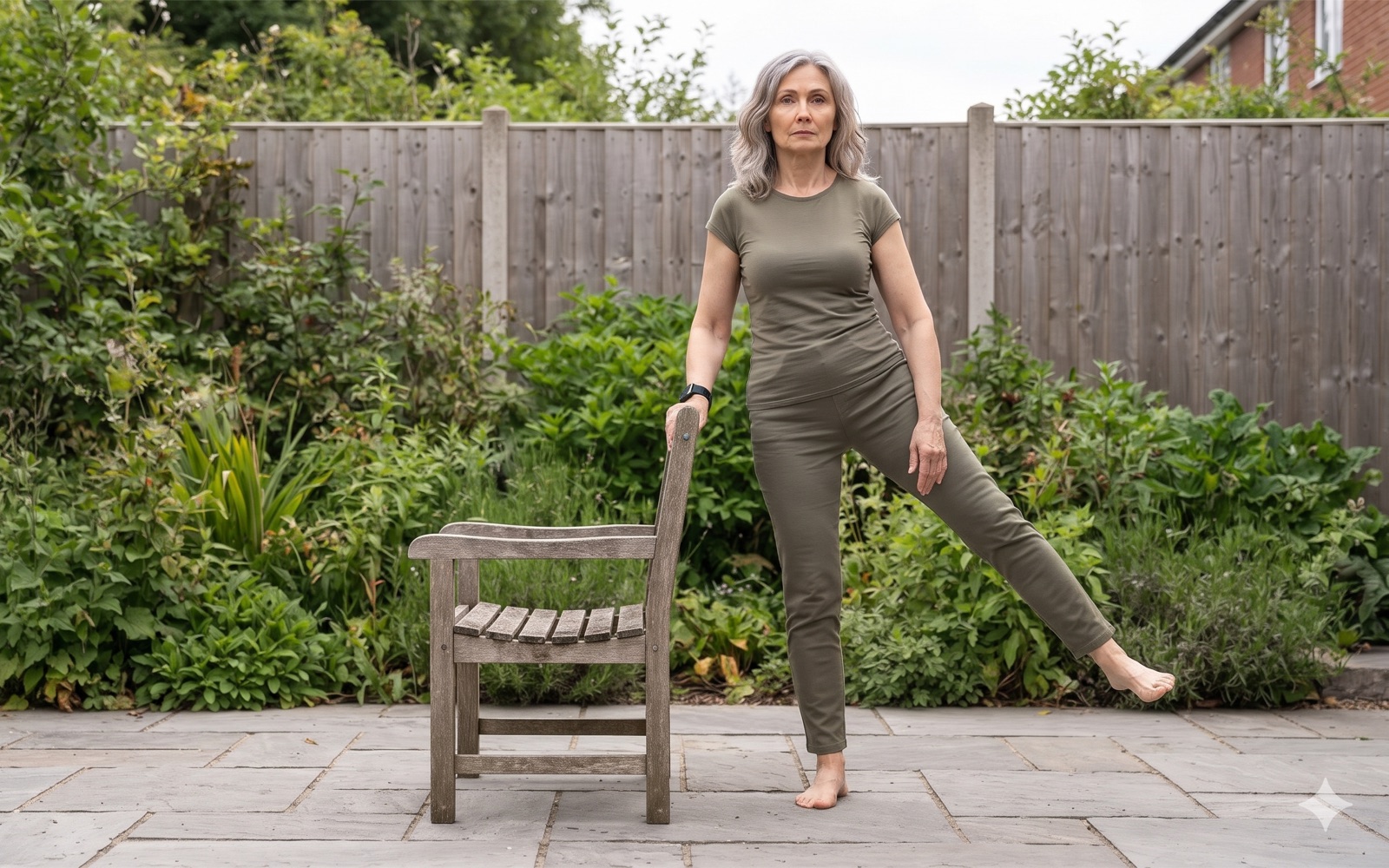
10. Side kick
Lie on your side in a straight line, head resting on your lower arm, top leg lifted to hip height. Swing it forward with a flexed foot, then back with a pointed foot, keeping your trunk still. Beginner: bend your bottom knee for balance and make the swing smaller.
11. Swimming
Lie face down with your arms reaching overhead. Lift your head, arms and legs a little, then flutter opposite arm and leg in small, quick lifts while breathing steadily. Beginner: do it on hands and knees, reaching one arm and the opposite leg at a time.
12. Shoulder bridge (pelvic curl)
Lie face up with your feet planted hip-width apart. Breathe out and peel your spine off the mat until your knees, hips and shoulders form a line, then roll down slowly. Beginner: this pelvic curl is the beginner version; the classic adds a straight-leg kick from the top.
How effective is mat Pilates?
Trials show mat Pilates improves abdominal endurance and flexibility in healthy adults, and strength, balance and function in older adults. The changes are steady and usually measured over 8 to 12 weeks.
- Active middle-aged adults who did a basic mat routine of about 25 exercises, twice a week for 12 weeks, improved abdominal endurance, hamstring flexibility and upper-body endurance compared with a control group. Their posture and balance didn’t change [2].
- Healthy young women who did an hour of mat Pilates twice a week for eight weeks improved flexibility, abdominal endurance, trunk muscle activity and static balance [3].
- A meta-analysis of trials in healthy people found Pilates two to three times a week, for five to twelve weeks, improved abdominal endurance, while the pooled effect on flexibility was not clear [4].
- In adults over 60, a meta-analysis of nine trials found mat Pilates improved balance, leg strength, flexibility and endurance [5].
The research is encouraging but small, with short trials and uneven quality, so it supports mat Pilates as a solid form of exercise rather than a cure-all.
Is mat Pilates strength or cardio?
Mat Pilates is mainly strength and muscular endurance training, not cardio. It raises your heart rate only a little, so it works best alongside walking or another aerobic activity.
In a lab study, a 15-exercise mat session used about 1.9 calories a minute and didn’t raise heart rate or blood lactate much above resting levels [6]. A 2026 review of the limited studies that exist estimated that a typical Pilates session works at a light-to-moderate intensity, around 3 METs in the most reliable studies, and found that shorter rests between exercises pushed the intensity up [7].
That makes mat Pilates a good fit for the strength part of the US guidelines, which ask for muscle-strengthening activity on at least two days a week. It doesn’t replace the 150 to 300 minutes of moderate aerobic activity the same guidelines recommend [8]. If you want to know whether Pilates can count as strength training, our guide on whether Pilates is strength training goes deeper.
Is 30 minutes of mat Pilates enough?
Yes. Thirty focused minutes two or three times a week is enough to build core strength and flexibility, especially if you add regular walking on other days.
Most trials used two sessions a week of about an hour [2][3]. Three half-hour sessions add up to the same time, and shorter sessions are often easier to keep up. What matters most is doing it regularly for at least two to three months, and gradually making the moves harder as they get easier.
How do you put mat Pilates exercises into a session?
Warm up with the breath-led moves, work through the core and back extension exercises, then finish with side-lying work and a stretch. Classic mat sequences follow a similar logic, moving from lying face up to face down and then to the side.
A 25-minute beginner session using the moves above:
| Order | Exercise | Reps |
|---|---|---|
| 1 | The hundred (beginner) | 5–10 breaths |
| 2 | Half roll-back | 6 |
| 3 | Single-leg circles | 5 each way, each leg |
| 4 | Single-leg stretch | 8 each side |
| 5 | Double-leg stretch (beginner) | 6 |
| 6 | Spine stretch forward | 5 |
| 7 | Saw | 4 each side |
| 8 | Swan prep | 6 |
| 9 | Single-leg kick | 6 each side |
| 10 | Side kick | 8 each way, each side |
| 11 | Swimming (beginner) | 6 each side |
| 12 | Shoulder bridge (pelvic curl) | 8 |
If you’d rather start at the wall, the Wall Pilates for core session and our Wall Pilates core exercises use the same principles with more support.
Which mat Pilates exercises should you skip or modify?
Leave the advanced rolling moves, such as the roll-over, jackknife and boomerang, until you have solid core control, because they put your weight on your upper back and neck. Modify any move that causes pain, and keep your head down if your neck tires.
Some people need specific advice before starting. If you have osteoporosis, a back or neck condition, a recent injury, or you are pregnant or have recently given birth, check with your doctor or physical therapist which moves suit you. Deep forward bending and rolling exercises are the ones most often swapped for gentler options, such as the wall roll-down, which lets the wall support your spine.
The bottom line
Mat Pilates exercises are a set of slow, controlled floor moves, 34 in the classic sequence, that train your core, back, hips and flexibility with nothing but a mat. The 12 foundational moves above, each with a beginner version, are plenty to start with.
Research supports mat Pilates for abdominal endurance, flexibility and, in older adults, strength and balance, mostly over two to three months. Treat it as your strength work, add walking for your heart, and progress one exercise at a time.
Sources
Every source was read before it was cited. Numbers in the text, like [1], point here.
- [1]Defining Pilates exercise: a systematic reviewWells and colleagues, Complementary Therapies in Medicine, 2012
- [2]Pilates for improvement of muscle endurance, flexibility, balance, and postureKloubec, Journal of Strength and Conditioning Research, 2010
- [3]Can a Pilates exercise program be effective on balance, flexibility and muscle endurance? A randomized controlled trialKibar and colleagues, Journal of Sports Medicine and Physical Fitness, 2016
- [4]Effect of the Pilates method on physical conditioning of healthy subjects: a systematic review and meta-analysisCampos and colleagues, Journal of Sports Medicine and Physical Fitness, 2016
- [5]Effects of mat Pilates on physical functional performance of older adults: a meta-analysis of randomized controlled trialsBueno de Souza and colleagues, American Journal of Physical Medicine and Rehabilitation, 2018
- [6]What is the exercise intensity of Pilates? An analysis of the energy expenditure, blood lactate, and intensity of apparatus and mat Pilates sessionsde Souza Andrade and colleagues, Journal of Bodywork and Movement Therapies, 2021
- [7]Metabolic intensity and energy cost of Pilates exercises: an exploratory systematic review and meta-analysis of limited and heterogeneous evidenceVitor and colleagues, Systematic Reviews, 2026
- [8]Top 10 Things to Know About the Second Edition of the Physical Activity Guidelines for AmericansOffice of Disease Prevention and Health Promotion (ODPHP), U.S. Department of Health and Human Services, 2025
Found this useful? Pass it on