Pilates back exercises: 8 moves for a stronger back
Pilates back exercises strengthen the muscles along your spine, your glutes and your deep core while keeping your back mobile. Trials support them for trunk endurance and flexibility; for back pain they help some people, about as well as other exercise.
By the TrueMe team · Published · 7 min read · How we write
Pilates back exercises are slow, controlled moves that strengthen the muscles along your spine, your glutes and your deep abdominals, and keep your back moving through its full range. They suit anyone who wants a stronger, more mobile back, from desk workers to people getting back into exercise.
This guide covers what Pilates can and can’t do for your back, eight exercises with step-by-step cues, a 15-minute routine, and how often to practise. It also explains when to get advice first, because back pain needs a different approach from general back strengthening.
What are Pilates back exercises?
They are mat and wall moves that work your back extensors, glutes and deep core together, alongside gentle bending, arching and twisting of the spine. The focus is control and endurance rather than heavy lifting.
Pilates is commonly defined as a mind-body exercise focused on strength, core stability, flexibility, muscle control, posture and breathing [1]. For your back, that means three jobs: building endurance in the muscles that hold you upright, keeping your spine mobile in every direction, and teaching your trunk and hips to share the work when you bend, lift and carry.
| What it trains | Example exercises below |
|---|---|
| Back extensors (the muscles along your spine) | Swan prep, swimming |
| Glutes and hamstrings | Pelvic curl |
| Deep abdominals and trunk control | Pelvic tilt, bird-dog |
| Spinal mobility | Cat stretch, open book, wall roll-down |
Is Pilates good for your back?
For a healthy back, yes: trials show Pilates builds trunk muscle endurance and flexibility. For back pain, it can help some people, but it works about as well as other types of exercise rather than better.
On strength and endurance, middle-aged adults who did a mat Pilates class twice a week for 12 weeks improved abdominal endurance and hamstring flexibility, though not their posture or balance [2]. In a large school study, adolescents who did just 10 minutes of Pilates-based exercise twice a week for 12 weeks improved both trunk flexor and back extensor endurance, along with hamstring flexibility [3].
On back pain, a Cochrane review found low to moderate quality evidence that Pilates reduces pain and disability compared with minimal intervention in people with non-specific low back pain. Compared with other exercise, though, it made no clear difference to disability [4]. A later review reached a similar conclusion: there is no strong evidence that any one type of exercise beats another for chronic low back pain, so goals and preferences should guide the choice [5].
The honest takeaway: Pilates is a good way to strengthen your back, and a reasonable option among several if you live with back pain, ideally with guidance.
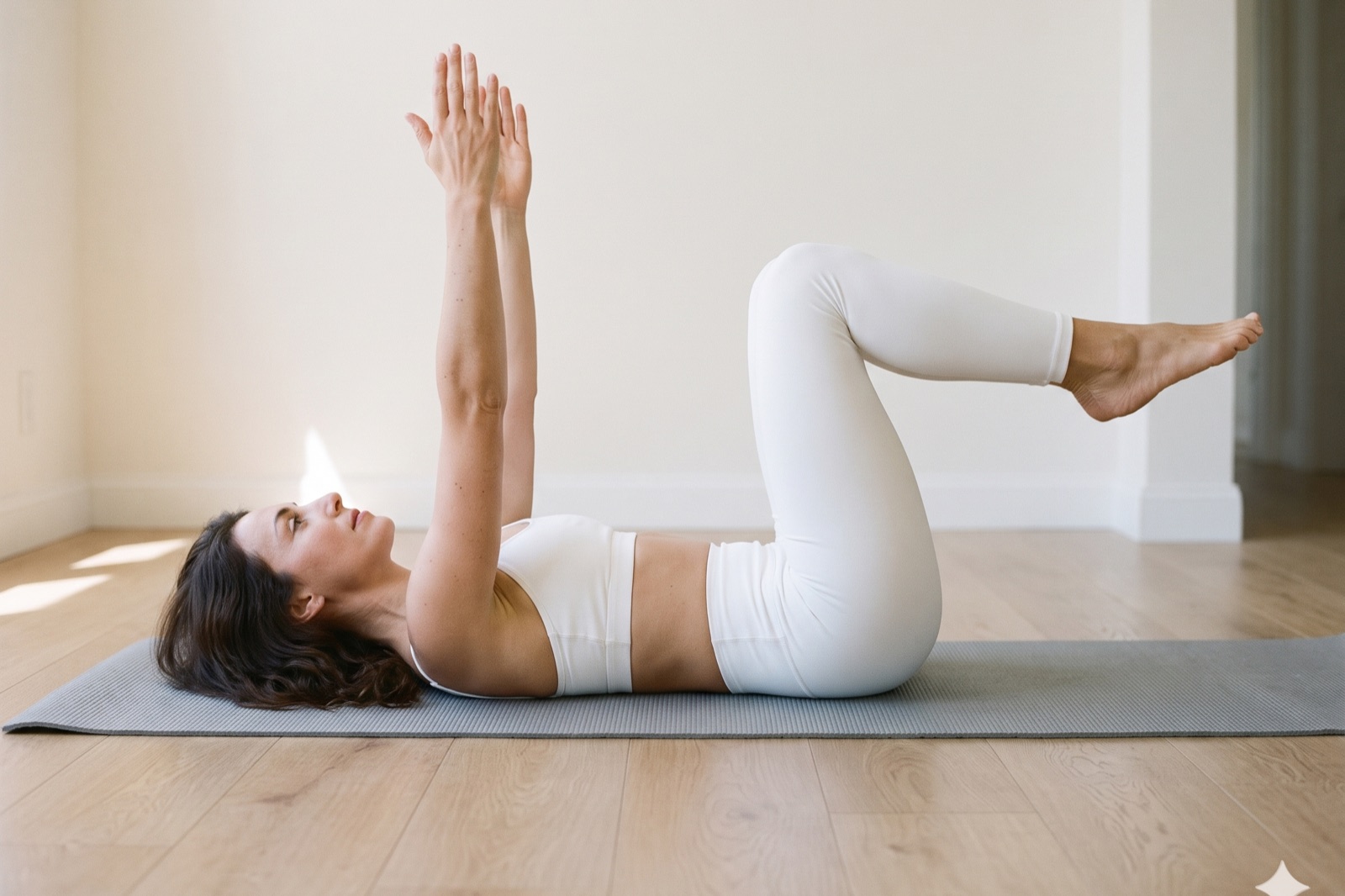
8 Pilates back exercises
Move slowly, breathe out on the effort, and stay within a range that feels comfortable. Mild muscle effort is fine; sharp pain, or pain that travels into your leg, is a signal to stop.
1. Pelvic tilt
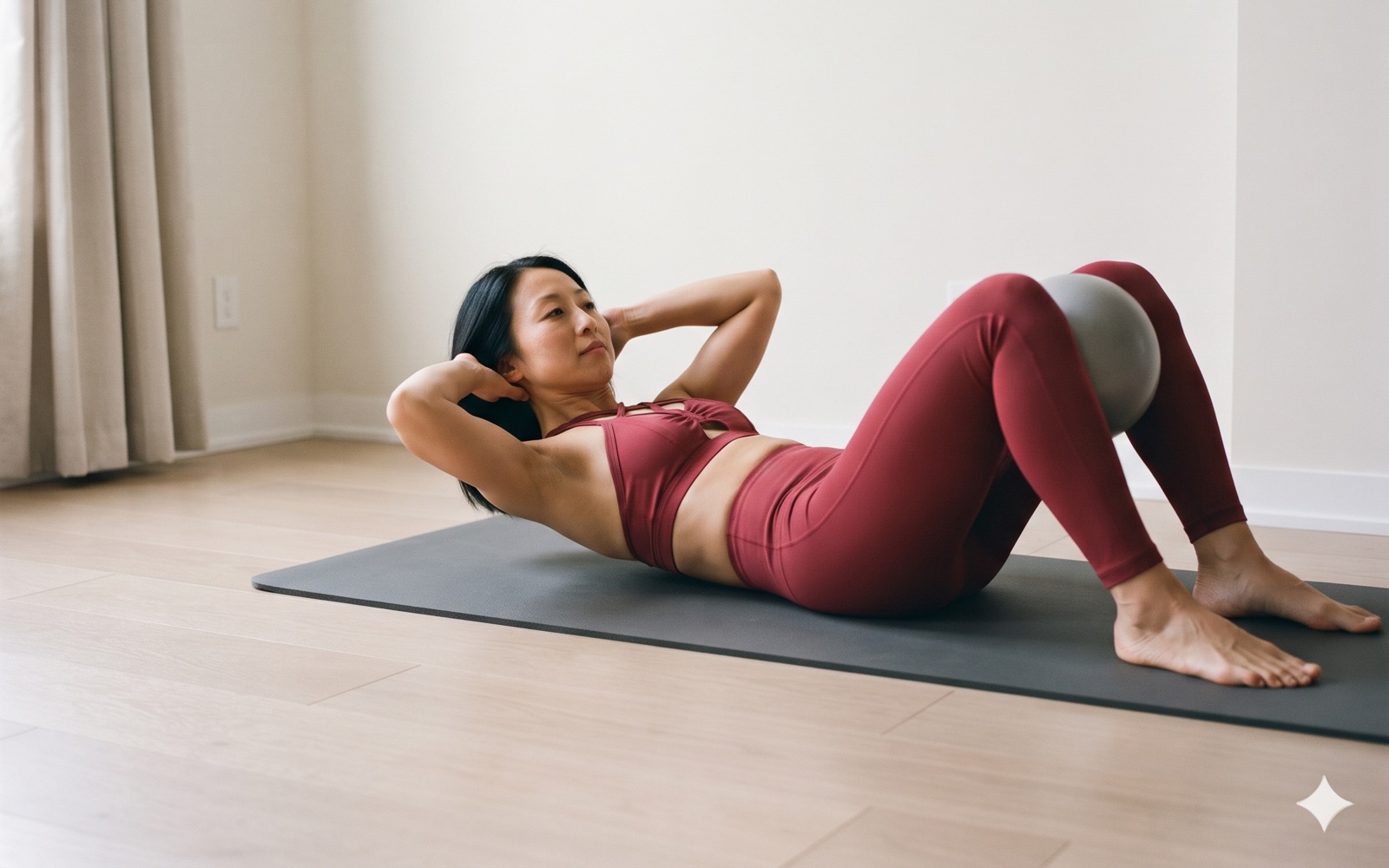
Lie face up with your knees bent and feet flat. Breathe out and gently tilt your pelvis so your lower back presses toward the mat, then breathe in and let it return to neutral, with a small natural curve. 10 slow reps. This teaches your deep abdominals to switch on before bigger moves.
2. Pelvic curl
From the same position, breathe out, tilt your pelvis and peel your spine off the mat one section at a time until your knees, hips and shoulders form a line. Breathe in at the top, then roll down slowly from the top of your back to your tailbone. 8–10 reps. Easier: lift only partway.
3. Cat stretch
Come onto your hands and knees, hands under shoulders and knees under hips. Breathe out and round your spine toward the ceiling, letting your head drop; breathe in and lengthen back to a flat back, then into a gentle arch with your chest forward. 6–8 slow reps. Move only as far as feels easy.
4. Bird-dog
Stay on hands and knees with a flat back. Reach one arm forward and the opposite leg back until both are in line with your body, keeping your hips level and your lower back still. Hold for two breaths, then switch. 6–8 reps each side. Easier: reach just the leg, keeping both hands down.
5. Swan prep
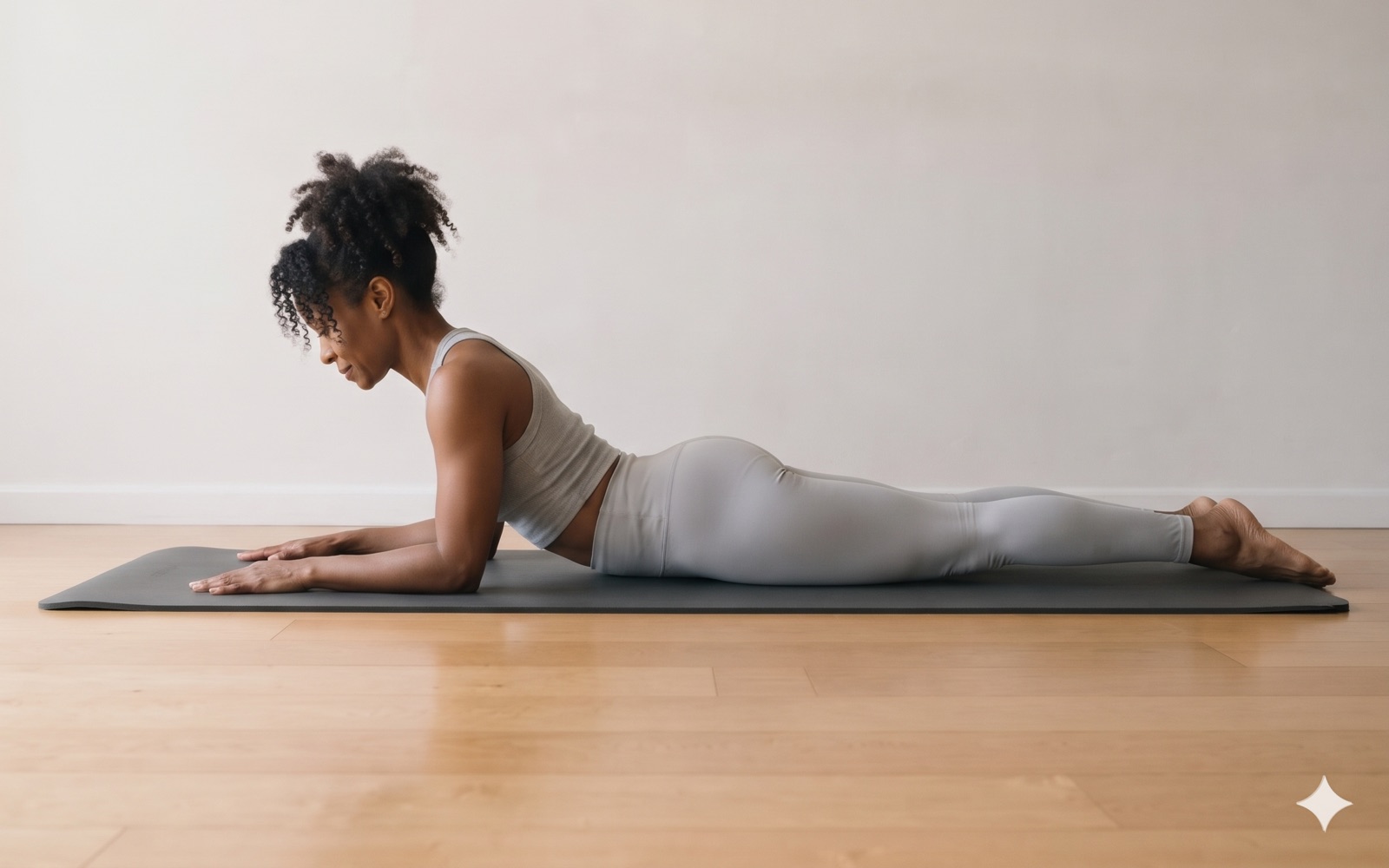
Lie face down with your forearms on the mat, elbows under or just in front of your shoulders. Lengthen through the top of your head and lift your chest a few inches, keeping your eyes down and your lower back long, then lower. 6–8 reps. Easier: keep your forehead down and lift only your head and shoulders slightly.
6. Swimming
Still face down, reach your arms overhead and your legs long. Lift one arm and the opposite leg a few inches, lower, and switch, building to a slow, steady rhythm. 8–10 reps each side. Easier: lift only the legs, with your forehead resting on your hands.
7. Open book
Lie on your side with your knees bent in front of you and your arms reaching forward, palms together. Breathe in as you open your top arm up and over to the other side, following it with your eyes so your upper back turns, then breathe out and return. 5–6 reps each side. Keep your knees stacked so the turn comes from your upper back.
8. Wall roll-down
Stand with your back against the wall and your feet a small step forward. Nod your chin and roll your spine away from the wall one section at a time, letting your arms hang, then roll back up the same way. 5–6 reps. See the wall roll-down page for a video demo.
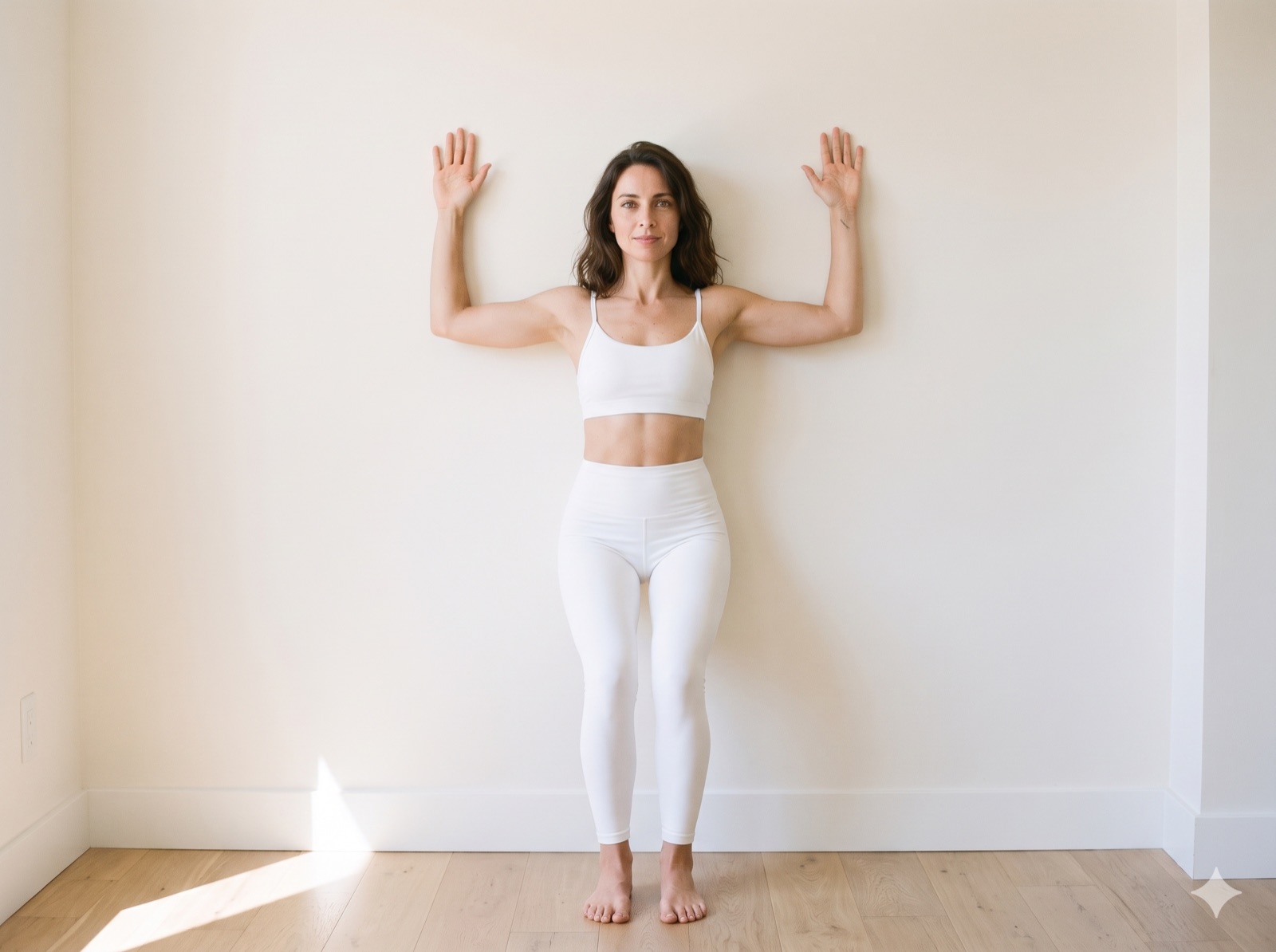
For the upper back and shoulders, add the wall angel and the standing wall rotation. Both are easy to do between tasks if you sit for long stretches.
Which Pilates exercise is best for the lower back?
No single exercise is best. A mix that trains the back extensors, glutes and deep abdominals, plus gentle mobility, does more than any one move.
If you only have a few minutes, choose one from each group: swimming or swan prep for the back extensors, the pelvic curl for the glutes, and bird-dog for trunk control. The reviews above found no clear winner between exercise types for low back pain [4][5], which is a good reason to pick moves you enjoy and will keep doing.
A 15-minute Pilates back routine
Do this routine two or three times a week. Rest about 20 seconds between moves, and finish with a minute of slow breathing.
| Order | Exercise | Reps |
|---|---|---|
| 1 | Pelvic tilt | 10 |
| 2 | Pelvic curl | 8–10 |
| 3 | Cat stretch | 6–8 |
| 4 | Bird-dog | 6–8 each side |
| 5 | Swan prep | 6–8 |
| 6 | Swimming | 8–10 each side |
| 7 | Open book | 5–6 each side |
| 8 | Wall roll-down | 5–6 |
Can you tone your back with Pilates?
Pilates can strengthen and firm the muscles of your back, which changes how your back works and how you hold yourself. It can’t remove fat from your back specifically.
When researchers had young adults train only one leg for 12 weeks, the participants lost some body fat, but from their arms and trunk rather than the trained leg [6]. Fat loss happens across the whole body, driven by overall activity, eating and sleep, so Pilates back exercises are best judged by strength and comfort, not by how they change one area.
Can you do Pilates if you have back pain?
Often yes, with the right guidance. Many people with ongoing low back pain use Pilates, and it helped in trials, but your exercises should fit the cause and stage of your pain.
Get advice before you start if your back pain is severe, hasn’t improved after a few days, or followed an injury [7]. Contact a provider right away if it comes with weakness or numbness in your buttocks or legs, loss of bladder or bowel control, pain that travels below the knee, an unexplained fever, or pain that wakes you at night [8]. If you are pregnant, have osteoporosis or have had back surgery, ask your doctor or physical therapist which moves are right for you. A physical therapist can adapt the exercises above so they suit your back.
How often should you do Pilates back exercises?
Two to three times a week is a good target. Short sessions work: the adolescents in the school study improved with two 10-minute sessions a week [3].
US guidelines recommend muscle-strengthening activity on at least two days a week, plus 150 to 300 minutes of moderate aerobic activity such as brisk walking [9]. Walking pairs especially well with back work, because it keeps you moving without loading your spine heavily. For more trunk work, our Wall Pilates core exercises add the deep abdominal side.
The bottom line
Pilates back exercises build endurance in the muscles that hold you upright, strengthen your glutes and deep core, and keep your spine moving. Trials support them for trunk endurance and flexibility, and as one sensible option among several for ongoing low back pain.
Start with the eight moves above two or three times a week, move slowly within a comfortable range, and walk on other days. If you have pain that is severe, persistent or follows an injury, get advice first and let a professional tailor the plan.
Sources
Every source was read before it was cited. Numbers in the text, like [1], point here.
- [1]Defining Pilates exercise: a systematic reviewWells and colleagues, Complementary Therapies in Medicine, 2012
- [2]Pilates for improvement of muscle endurance, flexibility, balance, and postureKloubec, Journal of Strength and Conditioning Research, 2010
- [3]Effect of Pilates Method on muscular trunk endurance and hamstring extensibility in adolescents during twelve weeks training and detrainingGonzález-Gálvez and colleagues, Journal of Bodywork and Movement Therapies, 2020
- [4]Pilates for low back painYamato and colleagues, Cochrane Database of Systematic Reviews, 2015
- [5]The effects of Pilates exercise in comparison to other forms of exercise on pain and disability in individuals with chronic non-specific low back pain: a systematic review with meta-analysisWong and colleagues, Musculoskeletal Care, 2023
- [6]Regional fat changes induced by localized muscle endurance resistance trainingRamírez-Campillo and colleagues, Journal of Strength and Conditioning Research, 2013
- [7]Back PainMedlinePlus, U.S. National Library of Medicine, 2025
- [8]Low back pain - acuteMedlinePlus Medical Encyclopedia, U.S. National Library of Medicine, 2025
- [9]Top 10 Things to Know About the Second Edition of the Physical Activity Guidelines for AmericansOffice of Disease Prevention and Health Promotion (ODPHP), U.S. Department of Health and Human Services, 2025
Found this useful? Pass it on