Pilates leg workout: 8 mat moves for stronger legs
This Pilates leg workout uses eight slow mat moves to strengthen your glutes, thighs and hips in about 20 minutes. Do it two or three times a week; trials of mat Pilates show steady gains in leg strength and everyday function over eight to twelve weeks.
By the TrueMe team · Published · 8 min read · How we write
A Pilates leg workout strengthens your glutes, thighs and hips with slow, controlled moves on a mat, using your own body weight instead of machines. Done two or three times a week, it builds the kind of leg strength you use every day: getting up from a chair, climbing stairs and staying steady on your feet.
This article gives you a complete 20-minute routine: a short warm-up, eight Pilates leg exercises with easier and harder options, and a cool-down. It also covers what the research shows, what Pilates can and can’t change about your legs, and how to keep progressing.
What is a good Pilates leg workout?
A good Pilates leg workout trains every side of the leg: the glutes and hamstrings at the back, the quadriceps at the front, and the outer and inner thighs that keep your hips and knees steady. It uses controlled movement and steady breathing rather than speed.
Pilates is usually described as a mind-body method that works on strength, core stability, flexibility, muscle control, posture and breathing [1]. In a leg session that means you keep your pelvis and trunk still while your legs do the work, which is why even simple moves like a side-lying leg lift feel harder than they look.
The routine below takes about 20 minutes. Here it is at a glance:
| Part | What you do | Time |
|---|---|---|
| Warm-up | Marching, hip circles, heel raises, knee sways | 3 minutes |
| Workout | 8 leg exercises, one round | 12–14 minutes |
| Cool-down | Hamstring, hip and thigh stretches | 3 minutes |
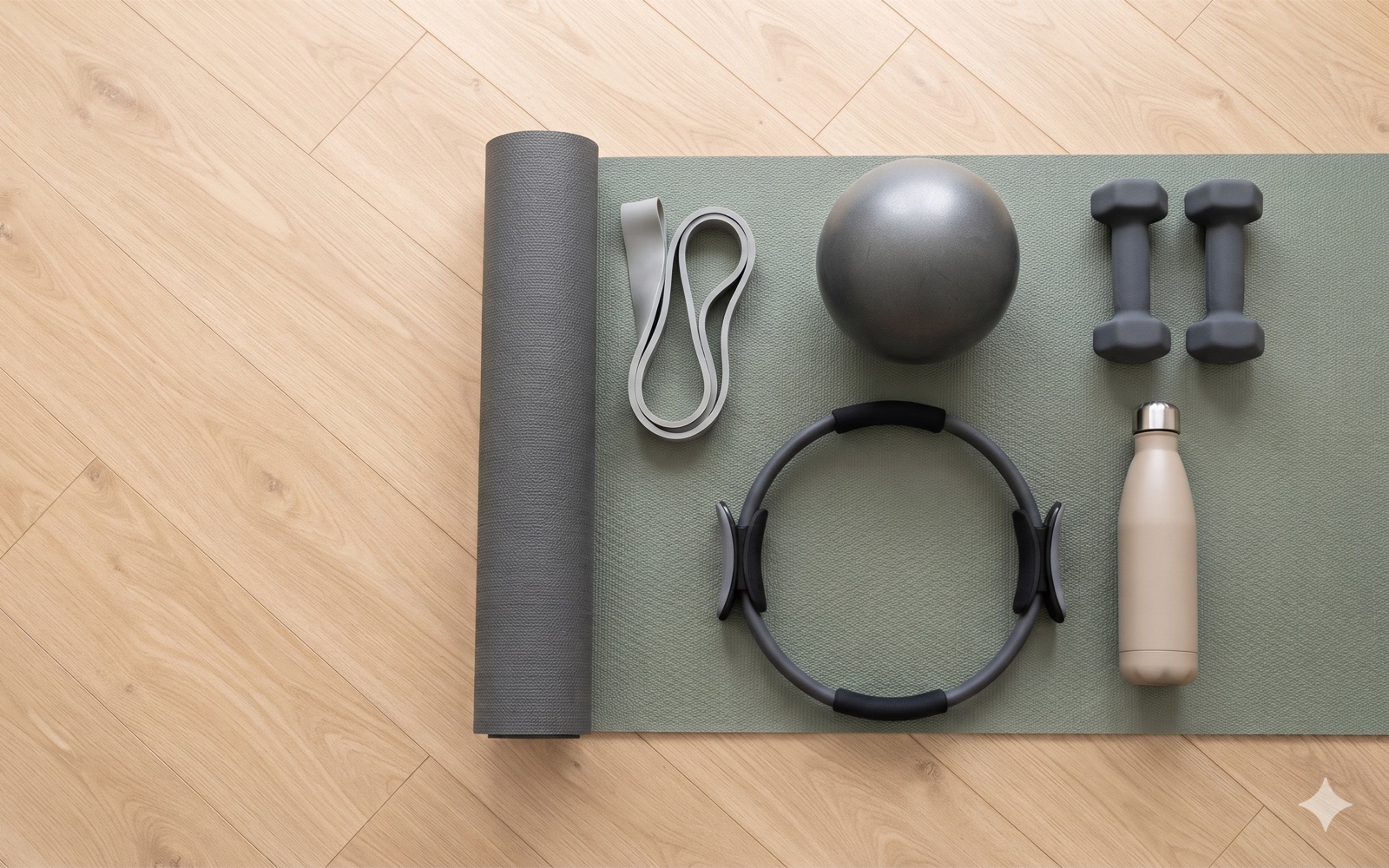
All you need is a mat, a sturdy armless chair and a wall nearby for balance.
How do you warm up for a Pilates leg workout?
Spend about three minutes raising your body temperature and moving your hips, knees and ankles through an easy range before you load them. A warm body moves more smoothly and makes the controlled work easier to do well.
- Marching in place, 45 seconds. Lift your knees to a comfortable height and swing your arms.
- Hip circles, 5 each way. Hands on your hips, feet hip-width apart, draw slow circles with your pelvis.
- Heel raises, 10. Rise onto the balls of your feet and lower slowly, with a hand on the wall if you need it.
- Knee sways, 6 each side. Lying face up, feet planted wide on the mat, let both knees drop gently from side to side.
The 8-move Pilates leg workout
Do each move for the reps shown, resting about 20 seconds between moves. Breathe out on the effort, keep your lower back quiet, and stop any move that causes pain.
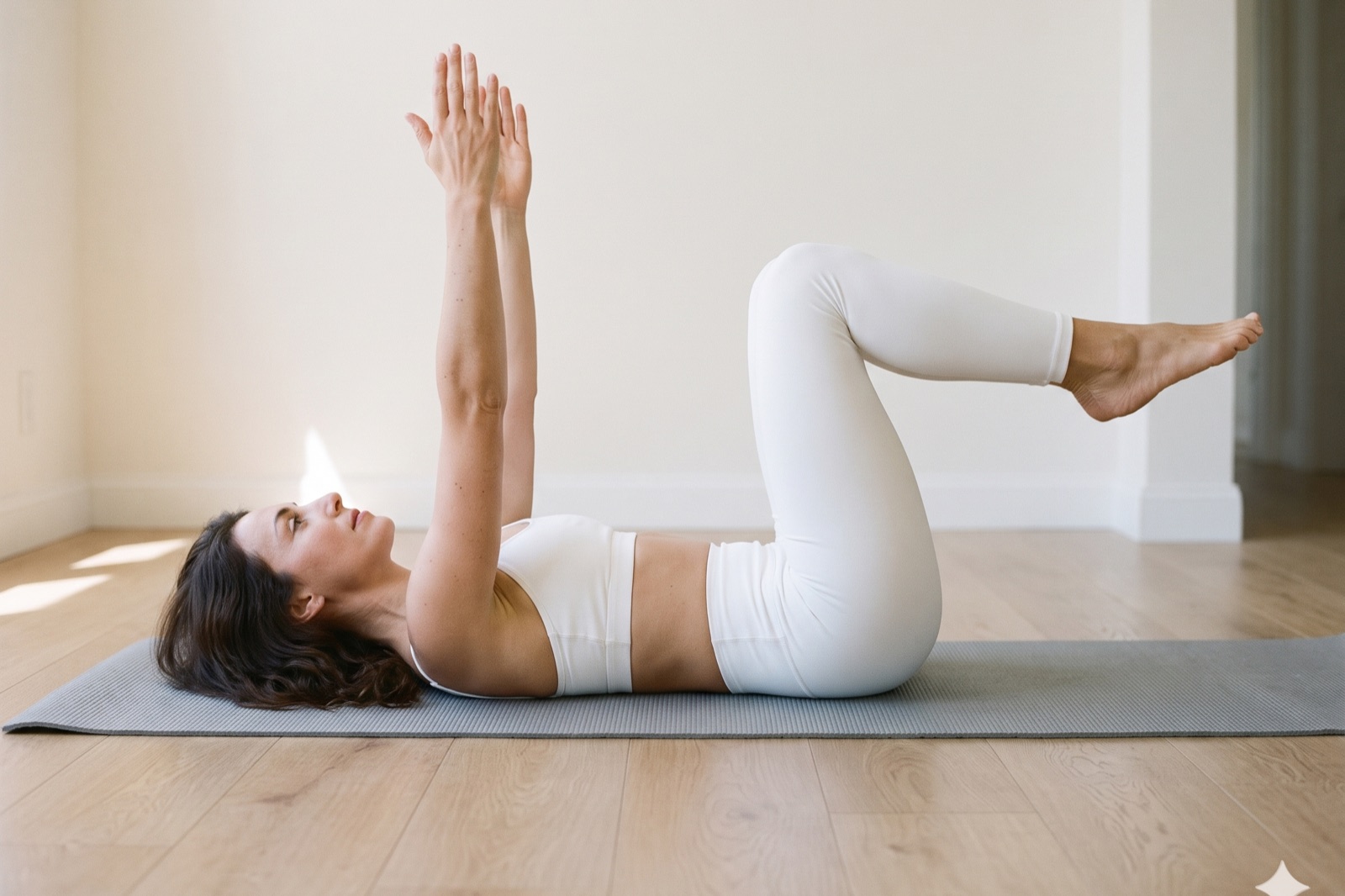
1. Pelvic curl (bridge)
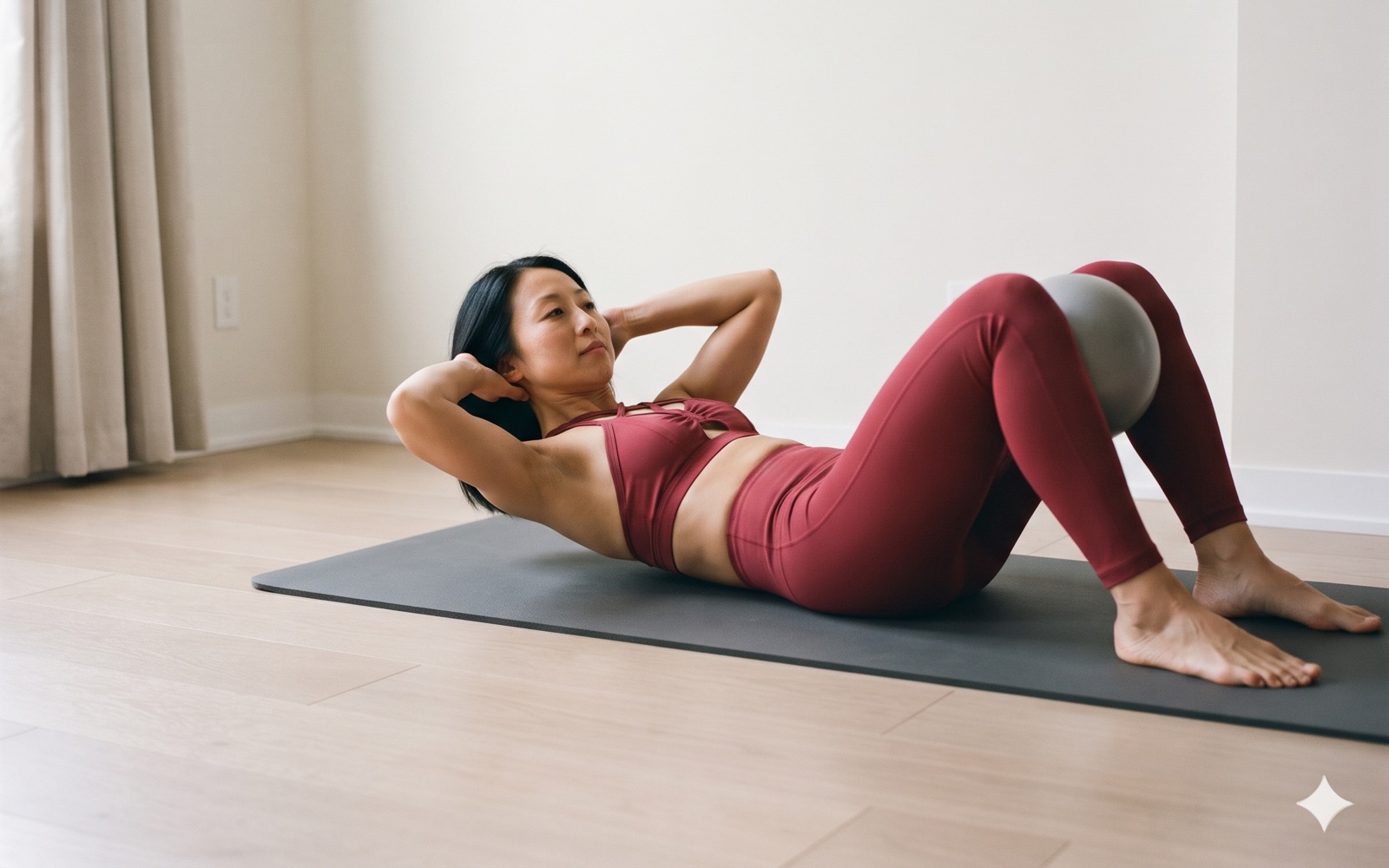
Start face up on the mat, feet planted hip-width apart and close enough that your fingertips can graze your heels. Breathe out, tilt your pelvis so your lower back flattens, then peel your spine off the mat one section at a time until your knees, hips and shoulders form a line. Breathe in at the top, then roll down slowly. 8–10 reps. Easier: lift only halfway. Harder: hold the top for three breaths.
2. Single-leg bridge
Start in the top of a pelvic curl. Shift your weight into one foot and lift the other a few inches off the mat without letting your hips drop or tilt. Lower your hips a little, then press back up. 6–8 reps each side. Easier: keep both feet down and squeeze for a three-second hold instead.
3. Side-lying leg lift
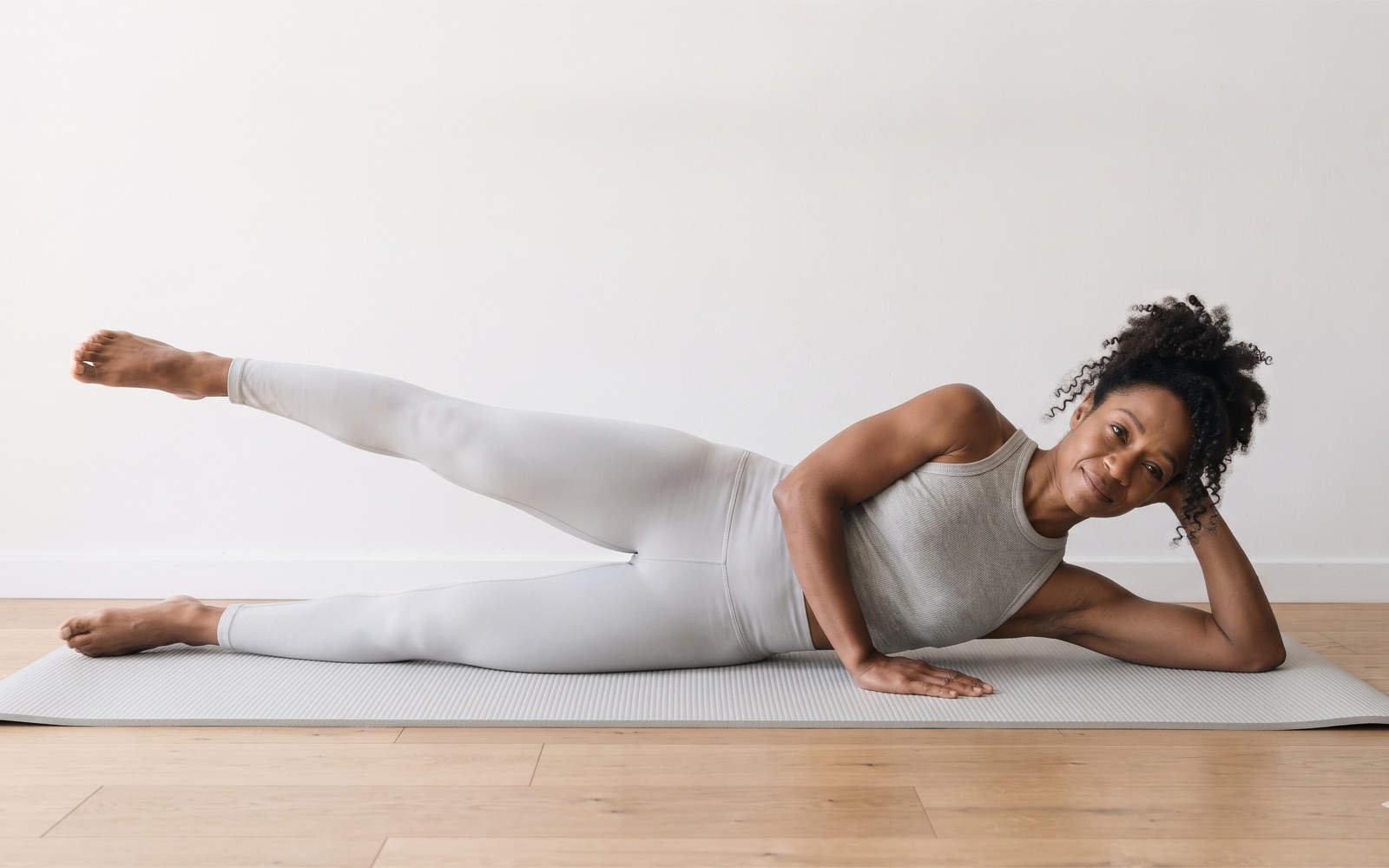
Lie on your side with your bottom knee bent for balance and your top leg long, in line with your body. Keep your toes facing forward and lift the top leg to about hip height, then lower it over three counts. 10–12 reps each side. Harder: pause for two seconds at the top.
4. Clamshell
Stay on your side with both knees bent in front of you and your feet together. Keeping your feet touching, open your top knee like a shell without letting your pelvis roll back. 12 reps each side. Harder: loop a light resistance band just above your knees.
5. Inner-thigh lift
Still on your side, bend your top leg and rest that foot on the mat in front of your bottom knee, or on a cushion. Keep the bottom leg straight and lift it a few inches, then lower slowly. 10–12 reps each side. This small move works the inner thigh, which most routines skip.
6. Prone leg lift
Lie on your stomach with your forehead resting on your stacked hands. Press your hips gently into the mat, then lift one straight leg a few inches by squeezing your glutes, without arching your lower back. 8–10 reps each side. Easier: bend the knee to 90 degrees and lift the thigh only slightly.
7. Kneeling leg reach
Come onto your hands and knees, hands under shoulders and knees under hips. Slide one leg straight back and lift it to hip height, keeping both hips level and facing the floor. Lower it with control. 8–10 reps each side. Harder: reach the opposite arm forward at the same time.
8. Sit-to-stand
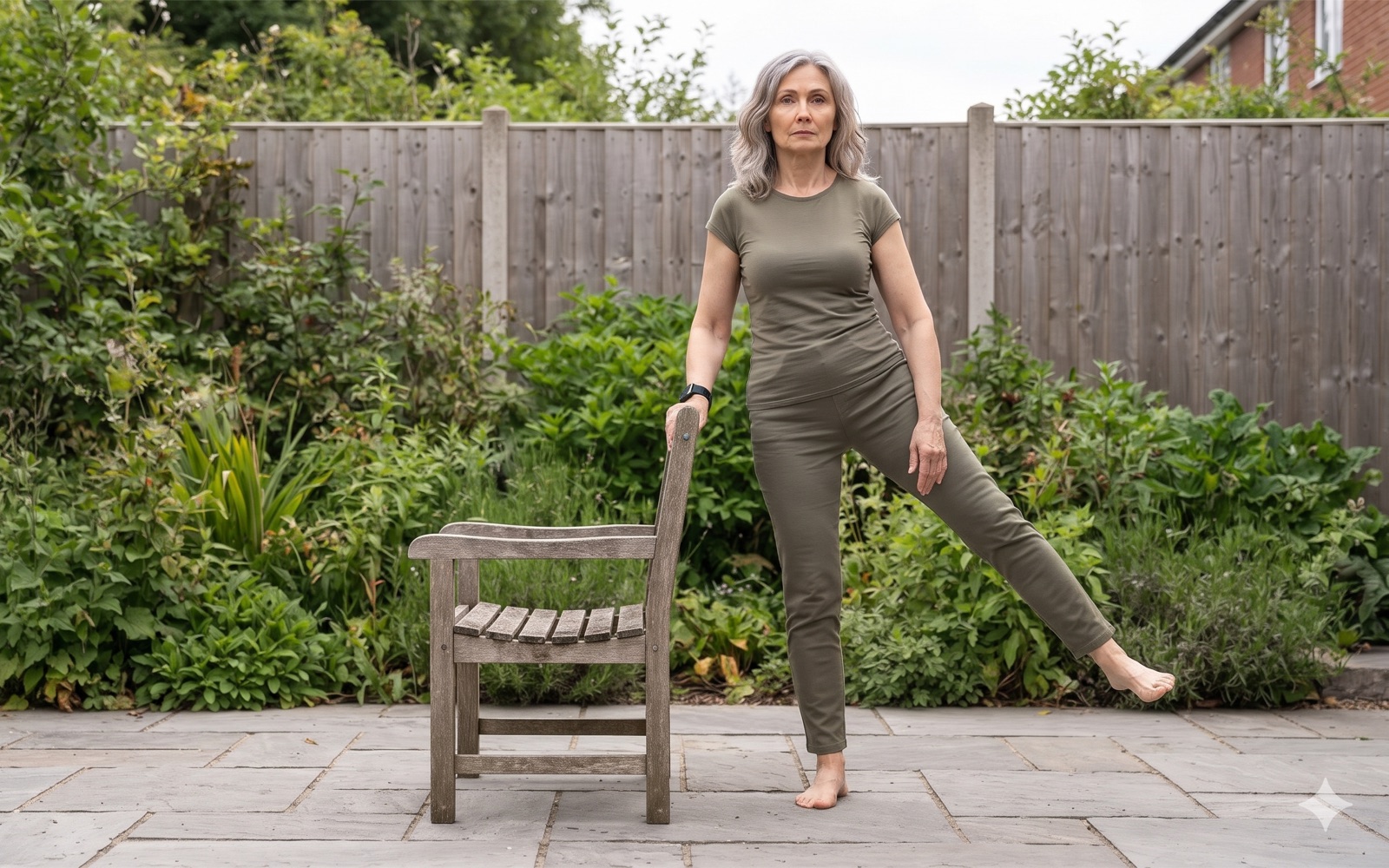
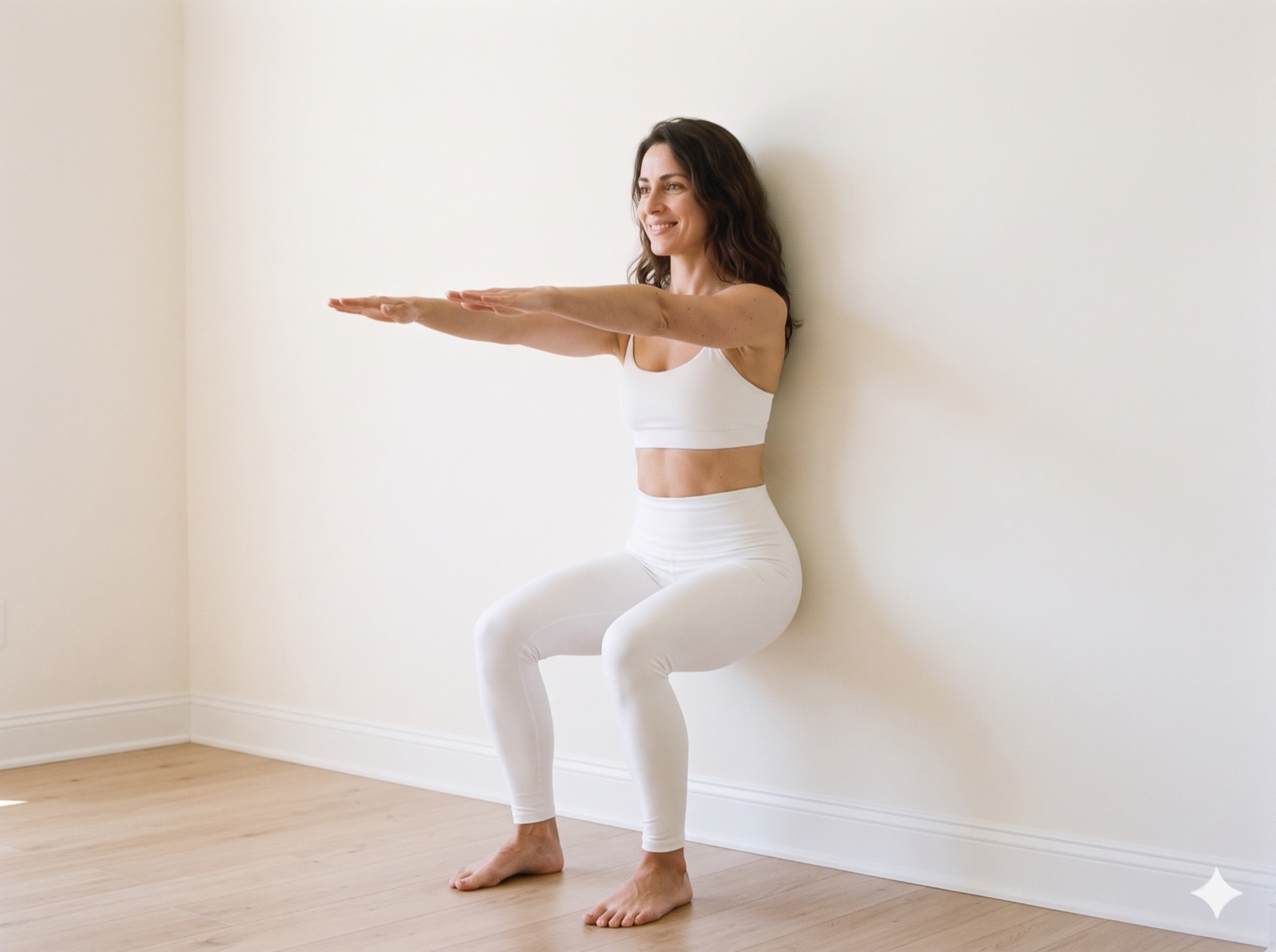
Sit near the front of a sturdy armless chair, feet flat and hip-width apart. Lean forward slightly, press through your whole foot and stand up tall, then sit back down slowly, as if the chair were further away. 10 reps. Harder: cross your arms over your chest or lower over four counts. If you prefer to stay at the wall, swap in a wall squat.
How should you cool down after a Pilates leg workout?
Take three minutes to stretch the muscles you just worked, holding each stretch for about 30 seconds while you breathe slowly. Stretch to a gentle pull, never to pain.
- Lying hamstring stretch. On your back, loop a towel around one foot and raise that leg until you feel the back of your thigh lengthen.
- Figure-four stretch. On your back, cross one ankle over the opposite knee and draw both legs gently toward you.
- Side-lying thigh stretch. On your side, hold your top ankle and draw your heel toward your glute, keeping your knees together.
Do Pilates leg workouts actually work?
Yes, for leg strength and everyday function, based on trials of mat Pilates. Most of the research involves older adults, and the changes are steady rather than dramatic.
- A meta-analysis of nine randomized trials in adults over 60 found that mat Pilates improved dynamic balance, lower-limb strength, hip and lower-back flexibility and cardiovascular endurance, while noting that more high-quality studies are needed [2].
- In a 12-week trial, older women who did mat-based Pilates twice a week became about two seconds faster at standing up from a chair five times and walked about 30 metres further in six minutes. Their one-leg balance didn’t change [3].
- Active middle-aged adults who did a 12-week mat class twice a week improved hamstring flexibility and muscle endurance, but not posture or balance, compared with a control group [4].
A review of trials in healthy adults found clear gains in abdominal muscle endurance from Pilates, but no clear pooled improvement in flexibility [5]. The honest summary: Pilates reliably builds strength and endurance, and other benefits vary from study to study.
Can Pilates slim or tone your legs?
Pilates can make your leg muscles stronger and firmer, but it can’t remove fat from your legs specifically. Fat loss happens across the whole body, not where you exercise.
In one study, 11 young adults trained only one leg for 12 weeks with very high numbers of repetitions. They lost some body fat, but it came from their arms and trunk, not from the leg they trained [6]. So a leg workout will change how your legs work and feel, while any change in their size depends on your overall activity, eating, sleep and time.
That is still a good reason to train your legs. Stronger glutes and thighs make walking, stairs and getting up easier, and they help you stay independent as you get older.
How often should you do a Pilates leg workout?
Two or three times a week on non-consecutive days is enough for most people. Your muscles adapt in the rest days between sessions, so daily leg work isn’t needed.
US guidelines ask adults to do muscle-strengthening activity that works all the major muscle groups on at least two days a week, and to add 150 to 300 minutes of moderate aerobic activity, such as brisk walking, across the week [7]. This workout covers the legs and hips; pair it with an upper-body or core session and some walking to round out your week. Our guide on how often you should do Pilates has sample weekly plans.
If you’re new to exercise or coming back after a long break, start with one round twice a week. If you have knee, hip or back problems, or a health condition, check with your doctor or physical therapist before you begin.
How do you make a Pilates leg workout harder?
Make one change at a time once a move feels easy for all its reps with good form. Strength guidelines recommend raising the challenge gradually, for example once you can do one or two more repetitions than your target [8].
Ways to progress without new equipment:
| Change | Example |
|---|---|
| One leg instead of two | Move from the pelvic curl to the single-leg bridge |
| Slower lowering | Take four counts to lower in each side-lying lift |
| Longer holds | Hold the top of each bridge for three breaths |
| More rounds | Repeat the eight moves twice with a minute’s rest |
| Light resistance | A band above the knees for clamshells and bridges |
Wall moves are a good next step too. The wall glute press and the wall-supported reverse lunge add standing strength and balance to the floor work above.
The bottom line
A Pilates leg workout uses slow, controlled moves to strengthen your glutes, thighs and hips, and trials of mat Pilates show real gains in leg strength, chair-rise speed and flexibility, mostly over eight to twelve weeks. It works best two or three times a week alongside regular walking.
It won’t target fat on your legs, and it doesn’t need to. Focus on doing each move well, add challenge one step at a time, and let stronger, steadier legs be the result you measure.
Sources
Every source was read before it was cited. Numbers in the text, like [1], point here.
- [1]Defining Pilates exercise: a systematic reviewWells and colleagues, Complementary Therapies in Medicine, 2012
- [2]Effects of mat Pilates on physical functional performance of older adults: a meta-analysis of randomized controlled trialsBueno de Souza and colleagues, American Journal of Physical Medicine and Rehabilitation, 2018
- [3]The effects of 12 weeks Pilates-inspired exercise training on functional performance in older women: a randomized clinical trialVieira and colleagues, Journal of Bodywork and Movement Therapies, 2017
- [4]Pilates for improvement of muscle endurance, flexibility, balance, and postureKloubec, Journal of Strength and Conditioning Research, 2010
- [5]Effect of the Pilates method on physical conditioning of healthy subjects: a systematic review and meta-analysisCampos and colleagues, Journal of Sports Medicine and Physical Fitness, 2016
- [6]Regional fat changes induced by localized muscle endurance resistance trainingRamírez-Campillo and colleagues, Journal of Strength and Conditioning Research, 2013
- [7]Top 10 Things to Know About the Second Edition of the Physical Activity Guidelines for AmericansOffice of Disease Prevention and Health Promotion (ODPHP), U.S. Department of Health and Human Services, 2025
- [8]American College of Sports Medicine position stand: progression models in resistance training for healthy adultsAmerican College of Sports Medicine, Medicine and Science in Sports and Exercise, 2009
Found this useful? Pass it on